

Discover Commercial LED Lighting Benefits in Fresno Today
Benefits of Commercial LED Lighting in Fresno — How Local Businesses Cut Energy Use and Lower Costs
LED fixtures convert more of the electricity you pay for into usable light than older lamp types. They deliver equal or better lumen output while drawing fewer watts and lasting far longer. This guide walks Fresno business owners and facility managers through the practical benefits of commercial LED upgrades: how LEDs cut energy use and utility bills, lower maintenance costs, improve comfort and safety on the job, and support sustainability goals. You’ll learn how LEDs save energy, how to estimate kWh and ROI, which California rebates matter, and how smart lighting keeps your facility ready for the future. We also cover lifetime performance, recommended light quality for offices and industrial spaces, environmental wins like lower CO2 and less hazardous waste, and the financial steps to evaluate payback and net savings. Throughout, simple comparisons, tables, and checklists make it easy to plan a retrofit for Fresno properties.
Commercial LED Benefits: Energy Efficiency and Cost Savings in Fresno
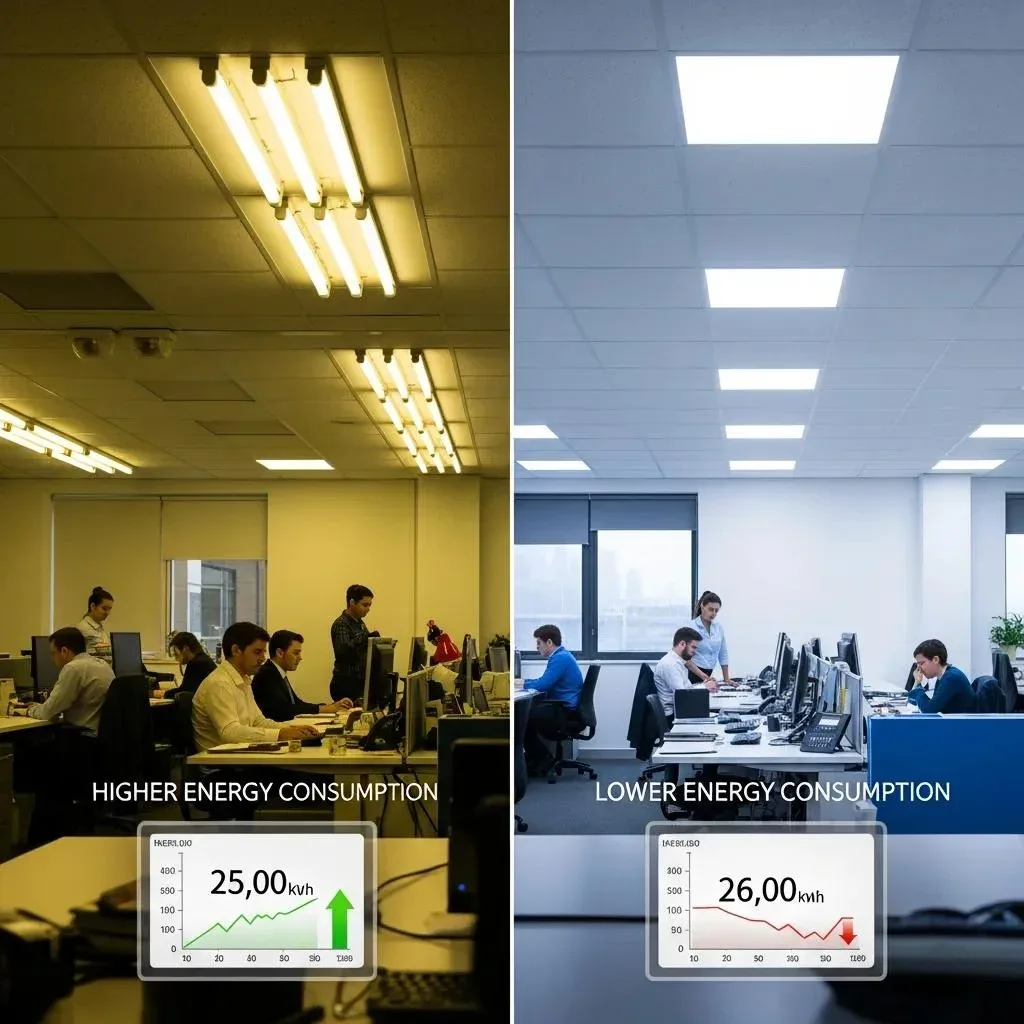
LEDs cut lighting energy use by producing more lumens per watt, avoiding losses from ballasts or starters, and working well with controls like dimmers and occupancy sensors. A straight swap of fluorescent or HID fixtures for LED alternatives commonly delivers 40–60% energy savings, depending on fixture type and controls. Those reductions lower kWh consumption and often reduce peak demand, which trims electricity bills for businesses that run long hours. Because LEDs throw light directionally (so less is wasted) and pair smoothly with sensors, they’re one of the most effective efficiency upgrades for Fresno commercial buildings. Knowing how these pieces fit together helps you estimate savings for your specific facility.
LEDs give consistent efficiency advantages that help with budgeting and rebate planning:
- Lower Energy Use: Typical 40–60% reduction in lighting kWh compared with legacy systems.
- Control Compatibility: Dimming and occupancy sensors add incremental savings of 10–30% in many spaces.
- Directional Emission: Less light waste reduces required fixture count and lowers overall power draw.
These clear benefits lead into the comparisons and local incentive details below so businesses can calculate real savings and rebate eligibility.
The table below shows common fixture types in a typical Fresno commercial setting, with wattage, lumen output, and estimated annual kWh for a representative fixture running 2,800 hours per year.
| Fixture Type | Typical Wattage | Typical Lumens | Estimated Annual kWh (2,800 hours) |
|---|---|---|---|
| LED Troffer | 40 W | 4,000 lm | 112 kWh |
| Fluorescent Troffer | 72 W | 4,000 lm | 202 kWh |
| Incandescent Equivalent | 150 W | 2,000 lm | 420 kWh |
That example shows swapping a fluorescent troffer for an LED troffer can cut annual kWh per fixture by roughly 45%. Multiply that across dozens or hundreds of fixtures and the savings add up quickly. Use per‑fixture numbers like these to scale estimates across floor plates and to inform rebate and payback calculations discussed later.
How Does LED Lighting Reduce Electricity Bills for Fresno Businesses?
LEDs lower bills by reducing the wattage needed for the same light level and by enabling controls that shorten run times. For instance, replacing a 72 W fluorescent with a 40 W LED saves 32 W per fixture while it’s on; at 12 hours per day for 260 business days, that’s about 100 kWh saved per year for one fixture. Combine that with a local commercial electricity rate and sensor-driven hours reductions and the dollar savings become significant for facilities with continuous lighting needs. Actual savings depend on daily hours, fixture layout, existing controls, and utility tariff details—an energy audit captures those variables and produces trustworthy bill-reduction projections.
To estimate bill savings, facility managers should collect three key inputs:
- Pre/post wattage per fixture: The core power reduction driving kWh savings.
- Operating hours per fixture: Peak and non-peak usage patterns.
- Local kWh rate: Utility tariff or average commercial rate.
Plug these into a simple kWh-to-cost calculation to get predictable annual savings and to prioritize high-use zones for early retrofits.
What Local Energy Rebates and Incentives Support LED Upgrades in Fresno?
California offers a variety of rebate programs that can cut upfront costs and speed payback for commercial LED projects. Rebates come from regional utilities, statewide efficiency programs, and sometimes local municipal initiatives. Most programs require either pre-approval or post-installation verification, along with documented fixture specs and, in some cases, installation by a qualified contractor. These rules can materially affect net project cost and payback timing.
When evaluating incentives, check these common program categories:
- Utility Lighting Rebates: Often require specific qualifying fixture models and verification.
- Commercial Retrofit Grants: May prioritize high-usage facilities or public-sector buildings.
- Controls Incentives: Extra rebates for occupancy sensors, daylight harvesting, or networked controls.
Because rebate paperwork and eligible product lists can be detailed, many Fresno businesses hire lighting auditors or turnkey retrofit contractors to handle documentation and coordinate with program administrators. Local electrical services that offer lighting design, Philips LED options, and retrofit experience can measure baseline use, specify qualifying fixtures, and submit rebate applications so you capture available incentives while staying compliant.
How Do Commercial LED Lighting Systems Improve Operational Efficiency and Longevity?
LED systems lower maintenance frequency, offer predictable lumen maintenance, and cut downtime from lamp or ballast failures. Many LEDs meet L70 lumen maintenance ratings well past 25,000–50,000 hours, meaning years of reliable service before a replacement is needed. Fewer routine lamp changes and ballast repairs reduce labor costs and limit disruption in key areas like warehouses and retail floors. That operational uptime means fewer service calls and steadier illumination, letting facilities teams focus on preventive maintenance rather than constant relamping.
LED fixtures also use modular components—drivers, heat sinks, and optics—that simplify targeted repairs and reduce spare-part inventory. This reliability improves total cost of ownership and makes long-term lighting budgets easier to predict. Warranties and performance guarantees from manufacturers and certified installers further strengthen the operational case for converting to LEDs and influence purchasing decisions.
What Is the Lifespan of Commercial LED Lights Compared to Traditional Lighting?
Commercial LEDs typically list lifespans from 25,000 to 50,000 hours depending on product class and thermal design; fluorescent lamps often last 7,000–15,000 hours, and incandescents much less. The L70 metric—hours until output drops to 70% of initial lumens—gives a practical sense of replacement timing. Many commercial-grade LEDs specify L70 at 35,000–50,000 hours or higher. For fixtures used 10–12 hours a day, an LED rated L70 at 50,000 hours can run for over a decade before lumen depreciation triggers replacement, cutting lamp and labor cycles and lowering lifecycle cost.
Knowing L70 helps maintenance teams plan replacement budgets and avoid surprise relamping. Choosing fixtures with verified lumen maintenance specs and quality drivers reduces risk in high-use areas and simplifies long-range capital planning.
How Does LED Durability Benefit Commercial Properties in Fresno?
LED fixtures are robust and tolerate shock, vibration, and temperature swings better than many traditional lamps—useful across Fresno’s commercial settings like warehouses, storefronts, and outdoor signage. Their solid-state construction removes fragile filaments and makes them less sensitive to frequent on/off cycles, so LEDs hold up in motion-activated zones and around heavy operations. That durability reduces premature failures and replacement labor, and it also lowers environmental impact from fewer discarded lamps and ballasts.
Durable LEDs mean fewer interruptions and more predictable lighting in critical zones such as loading docks, cold storage, and parking lots. With proper enclosures and IP-rated fixtures, LEDs deliver reliable outdoor and semi-exposed operation and save long-term maintenance costs versus conventional options.
In What Ways Does Commercial LED Lighting Enhance Workplace Environment and Productivity?
LEDs improve workplace lighting through better color rendering, tunable color temperatures, and stable, low-flicker output—factors that boost visual comfort, task performance, and occupant well-being. High Color Rendering Index (CRI) LEDs make colors truer for retail displays, design work, and inspections. Tunable white systems let you pick warmer tones for a cozy retail feel or cooler whites for focused office tasks. Reducing flicker and glare cuts eye strain and can reduce headaches and fatigue, which helps productivity.
Designing lighting around tasks and human-centered principles supports alertness and circadian needs in places where people spend long hours. By choosing the right CRI and color temperature and keeping illumination uniform, businesses can improve safety, morale, and accuracy in precision tasks—delivering measurable operational benefits beyond energy savings alone.
How Does Superior Light Quality Impact Employee Well-being and Productivity?
Better light quality—high CRI, proper color temperature, and low flicker—sharpens visual clarity, reduces strain, and supports mood and focus, which can boost productivity. For offices, CRI 80–90 and color temperatures between 3500–5000 K work well for reading, screens, and collaboration; in retail, CRI 90+ makes merchandise look its best. Dimming and tunable systems let you create lighting scenes that match tasks and save energy during non-peak periods. Investing in light quality therefore returns both human and financial benefits by lowering absenteeism, speeding task completion, and improving customer impressions.
Knowing these specification ranges helps facility teams pick fixtures that balance appearance and performance, ensuring upgrades support business goals rather than only reducing electricity use.
How Does LED Lighting Improve Safety and Security in Commercial Spaces?
LEDs enhance safety and security with steady, high-contrast light, instant-on performance, and easy integration with motion and occupancy controls so areas are lit only when needed. Outdoor LED flood and pathway lighting improve visibility in parking areas and walkways, reducing trip risks and helping surveillance cameras. Instant starts avoid warm-up delays of some legacy lamps, ensuring immediate illumination during emergencies or after hours—important for response and deterrence when paired with smart controls.
Combining LEDs with motion sensors and schedules improves security while cutting unnecessary runtime, delivering both energy and safety benefits. Zoned control also helps with emergency egress lighting design and saves energy across large campuses.
What Are the Environmental Advantages of Using Commercial LED Lighting in Fresno?
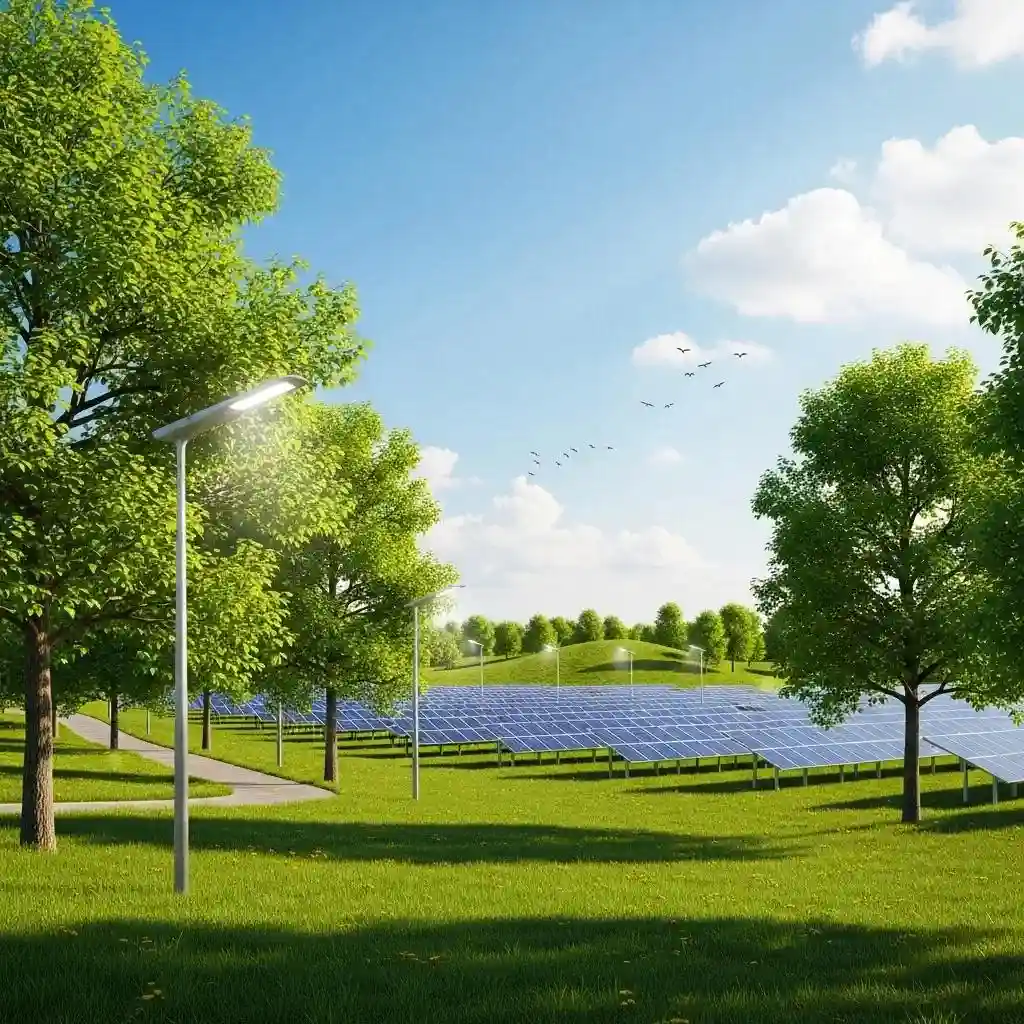
LEDs lower environmental impact mainly by cutting electricity use, which reduces CO2 emissions when the grid relies on fossil fuels, and by eliminating mercury-containing lamps. Lower kWh use scales down a facility’s annual carbon footprint, and when many Fresno businesses switch, the collective effect supports corporate sustainability goals and reporting. LEDs also avoid mercury used in some fluorescents, simplifying disposal and easing compliance with local environmental rules.
Longer lifespans mean fewer replacements, less packaging waste, and fewer service trips—reducing lifecycle transport emissions. Together, these factors make LED retrofits an effective move for companies pursuing measurable environmental improvements and wanting to align with investor or community sustainability expectations.
How Does LED Lighting Reduce Carbon Footprint and Environmental Impact?
Cutting lighting kWh reduces CO2 emissions based on your local grid’s emissions factor. For example, saving 10,000 kWh a year with LEDs corresponds to a proportional drop in metric tons of CO2 depending on the grid mix. To report reductions you need three inputs—kWh saved, local emissions factor (kg CO2 per kWh), and project duration—to produce credible sustainability numbers. Over time those cumulative savings help meet ESG targets and support local air-quality goals, making energy-efficient lighting a strategic environmental investment.
Quantifying reductions helps sustainability teams prioritize projects that deliver the biggest environmental and financial returns.
Why Are Mercury-Free and Recyclable LEDs Better for the Environment?
Unlike many fluorescent lamps that contain mercury, LEDs are generally mercury-free and present fewer disposal constraints, lowering hazardous-waste handling for businesses. LED recycling focuses on recovering metals and electronic parts and reduces the volume of spent lamps in landfills. Choosing recyclable fixtures and using certified recycling channels ensures end-of-life materials are handled responsibly, supporting compliance and lowering long-term waste liabilities for commercial properties.
Adopting LEDs aligns operational sustainability with regulatory trends that favor reducing hazardous materials in building inventories.
How Can Smart LED Lighting Systems Future-Proof Fresno Businesses?
Smart LED systems pair efficient fixtures with sensors, networked controls, and software to deliver extra savings, operational flexibility, and data for optimization. Common smart features—occupancy sensing, daylight harvesting, scheduling, and zoning—match lighting to actual use and daylight availability, producing energy savings beyond the fixture’s efficiency. Integration with building management systems and IoT platforms enables remote monitoring, fault detection, and analytics that shorten maintenance response times and uncover new efficiency gains. That makes lighting an active management layer that adapts as tenant needs change and supports staged modernizations instead of wholesale replacements.
Smart controls also boost user convenience and occupant experience: reconfiguring zones, tuning levels, and automating schedules reduces future retrofit costs when spaces change, helping businesses protect their lighting investment.
The table below compares common smart control features, their benefits, and typical additional savings to help Fresno businesses decide which options pay off fastest.
| Feature | Benefit | Typical Additional Savings |
|---|---|---|
| Occupancy Sensors | Lights off when unoccupied | 10–30% |
| Daylight Harvesting | Dim lights near windows | 10–25% |
| Scheduling/Zoning | Align lighting to business hours | 5–20% |
This comparison helps stakeholders prioritize controls that deliver the best incremental savings versus installation complexity; occupancy sensors and daylight harvesting often deliver the quickest ROI in mixed-use commercial spaces.
What Smart Controls and Automation Features Enhance LED Lighting Efficiency?
Key smart control features that boost efficiency include vacancy/occupancy sensors, daylight harvesting, networked dimming, and time-of-day scheduling—each cuts run-time or reduces delivered light when full output isn’t needed. Occupancy sensors switch or dim lights in unoccupied zones, daylight harvesting reduces electric light near windows, and networked systems enable centralized commissioning, automated fault alerts, and consistent schedules across multi-zone facilities. These layers often increase total lighting reductions beyond what fixture swaps alone achieve.
Choose a scalable control platform that supports open standards to make future expansion and BMS integration easier and to preserve value as needs evolve.
How Do Adaptability and Design Flexibility Benefit Commercial LED Installations?
Adaptable features—tunable white, modular fixtures, and simple dimming—make LED systems easier to repurpose when tenants or layouts change, reducing the need for costly future retrofits. Modular troffers and retrofit kits let you upgrade by zone, spreading cost and validating performance before full deployment. Tunable white supports different ambiances—retail displays, focused office work, or assembly-line lighting—without re-lamping. That design flexibility lowers long-term total cost of ownership and supports agile facilities management.
Prioritizing adaptable fixtures and open control protocols helps ensure your lighting investment remains useful and cost-effective as operational needs shift.
What Are the Financial Returns and Cost Considerations for Commercial LED Lighting in Fresno?
Calculating financial returns means mapping initial costs, available rebates, annual energy and maintenance savings, and simple payback or ROI. Cost drivers include fixture type, control complexity, installation labor, and disposal of old lamps and ballasts. Those inputs feed a payback calculation showing years-to-payback and multi-year net savings. Don’t forget maintenance savings—fewer relamps and reduced labor—plus rebates and local energy price assumptions for a realistic financial model. Collect baseline wattage, operating hours, local kWh rates, and rebate eligibility to build a facility-specific assessment.
The EAV table below outlines typical ROI calculation components and shows how each element factors into payback and 5-year net savings estimates for planning.
| Component | Attribute | Value (Example) |
|---|---|---|
| Initial Cost | Fixtures + labor per fixture | $200 |
| Annual Energy Cost | kWh * local rate (per fixture) | $45 |
| Maintenance Savings | Annual relamp/labor avoided | $25 |
| Rebates | One-time per-fixture credit | $40 |
| Simple Payback | Years to recover net cost | 2–4 years (example) |
This breakdown helps decision-makers gather inputs quickly and estimate realistic payback windows and medium-term net benefits, guiding retrofit phasing and financing choices.
How Is Return on Investment Calculated for LED Lighting Upgrades?
ROI for LED upgrades is usually expressed as simple payback: divide net installed cost after rebates by annual net savings (energy plus maintenance). For example, if net installed cost per fixture is $160 after a $40 rebate, annual energy savings are $45, and maintenance savings are $25, total annual savings equal $70—giving a simple payback of about 2.3 years ($160 ÷ $70). Over five years that example yields roughly $190 net savings per fixture (5 × $70 − $160). To run accurate calculations, collect pre/post wattage, operating hours, kWh rate, rebate amounts, installation labor, and expected maintenance intervals.
For site-specific estimates and installation planning, request a walkthrough and free cost estimate from a licensed local contractor; firms that provide lighting design, retrofit installation, and knowledge of Philips LED products can produce verified savings models and handle rebate paperwork for a smoother project.
What Are Typical Costs and Savings for LED Lighting Installation in Fresno?
LED retrofit costs depend on fixture type and project scope. Simple lamp or troffer retrofits usually cost less per fixture, while high-bay, exterior, or integrated smart systems cost more because of specialized optics and control hardware. Per-fixture installed costs vary with lumen output and control complexity; per-square-foot figures help estimate whole-building budgets. Annual savings commonly reflect 40–60% energy reductions per fixture plus maintenance savings that strengthen the multi-year financial case. Costs are influenced by the condition of existing electrical infrastructure, required control upgrades, and disposal of legacy lamps and ballasts.
To refine estimates for a specific Fresno site, tally fixture counts, current lamp wattages, operating schedules, and local utility rates, then compare vendor proposals that include warranties and verified performance metrics. Hiring a licensed electrician experienced with commercial retrofits and Philips LED products helps ensure accurate scope and reliable installed pricing.
Frequently Asked Questions
What are the long-term financial benefits of switching to LED lighting?
Switching to LEDs delivers meaningful long-term savings: lower energy bills, reduced maintenance costs, and potential rebates. LEDs typically use 40–60% less energy than traditional lighting, which cuts electricity expenses. Their longer lifespans mean fewer replacements, saving on labor and disposal. Over time those savings add up to a strong return on investment, which you can calculate using your specific usage patterns and local utility rates.
How can businesses ensure they select the right LED fixtures for their needs?
Choose fixtures based on lumen output, color temperature, CRI, and efficiency ratings, and match them to the tasks and ambiance each space needs. Consult a lighting pro to check compatibility with existing systems and to weigh performance versus budget. Reviewing product specs and warranties helps make sure the fixtures will meet long-term expectations.
What role do smart controls play in maximizing LED lighting efficiency?
Smart controls—occupancy sensors, daylight harvesting, and scheduling—significantly boost LED efficiency by reducing unnecessary runtime and adjusting output to conditions. These controls add energy savings on top of the inherent efficiency of LEDs, lower operational costs, and make lighting more adaptable to future space changes without extensive rewiring.
How do LED lighting upgrades contribute to corporate sustainability goals?
LED upgrades reduce energy use and the associated carbon emissions, helping companies meet sustainability targets. Because LEDs don’t contain mercury like many fluorescents, disposal is easier and cleaner. Investing in LEDs signals a commitment to sustainability that can strengthen brand reputation with customers, employees, and investors.
What are the common challenges businesses face when transitioning to LED lighting?
Common hurdles include upfront cost, ensuring compatibility with existing electrical and control systems, and arranging proper installation. While LEDs typically pay back quickly, the initial investment can be a barrier. Navigating rebate programs and documentation can also be time-consuming—working with experienced contractors or auditors reduces that burden.
How can businesses measure the success of their LED lighting upgrades?
Measure success by tracking energy consumption, maintenance costs, and occupant feedback. Compare kWh before and after installation to see energy savings, review maintenance logs for fewer relamps and service calls, and collect staff feedback on comfort and productivity. Those quantitative and qualitative metrics together give a full picture of the project’s impact.
DISCLAIMER This site is designed to assist homeowners in connecting with electrician service contractors. All electrical contractors are independent and this site does not warrant or guarantee any work performed. It is the responsibility of the homeowner to verify that the hired electrical service contractor furnishes the necessary license and insurance required for the work being performed. All persons depicted in a photo may be actors or models and not contractors listed on this site.