

Save on Costs with Energy Saving Business Lighting in Fresno
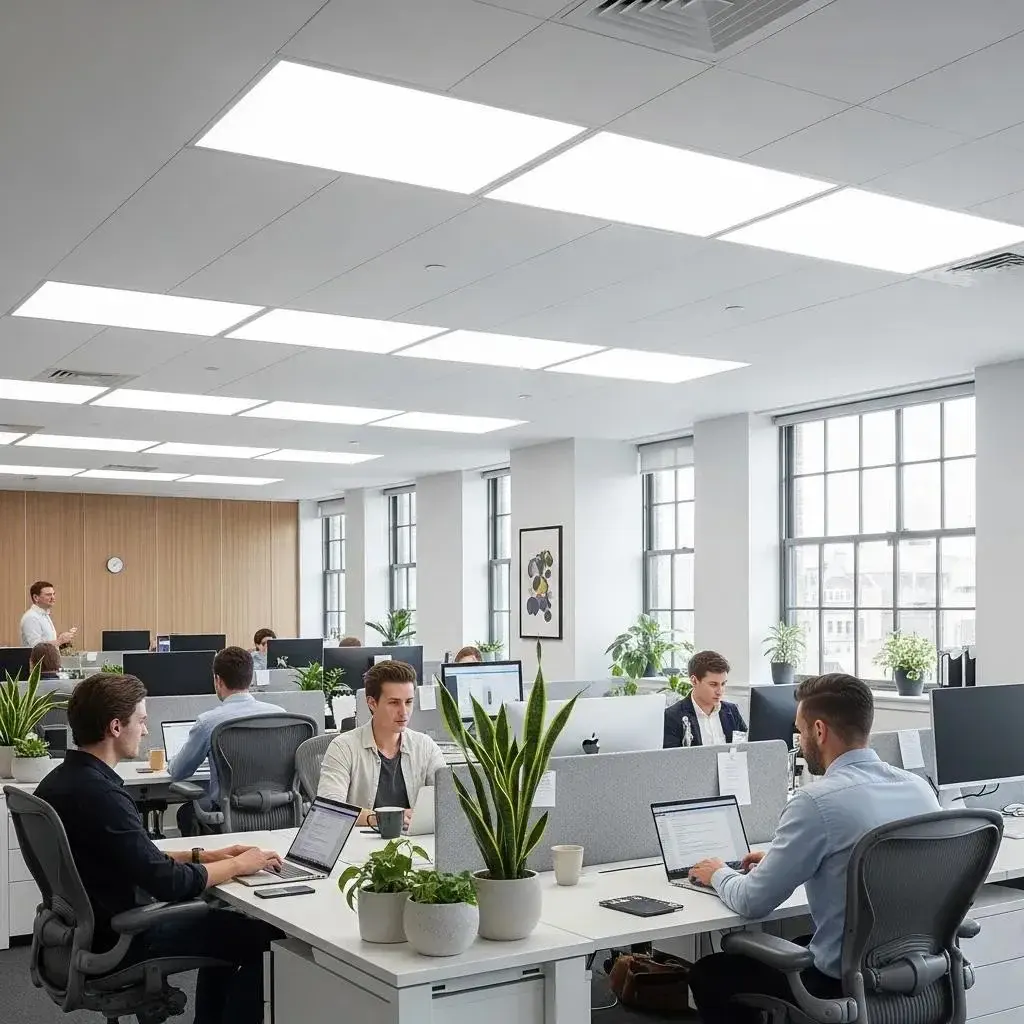
Energy-efficient commercial lighting upgrades in Fresno: how to cut energy use and lower operating costs
Upgrading commercial lighting replaces older fixtures and controls with higher-efficiency options to reduce electricity use and ongoing expenses. Often called lighting retrofits, these projects pair LED fixtures, improved drivers, and smart controls to lower kilowatt-hour consumption while delivering better light for employees and customers. Fresno businesses dealing with high energy bills, frequent lamp replacements, or poor illumination usually see the fastest payback from LED conversions plus control upgrades. This guide walks through what energy-efficient commercial lighting upgrades are, how a typical retrofit unfolds, the measurable benefits for offices, warehouses and parking areas, local rebate strategies in Fresno, and smart control choices that prolong savings. You’ll get practical steps for planning a project, estimating energy and cost impacts, and finding local services that install code-compliant systems under NEC and NFPA rules.
What are energy-efficient commercial lighting upgrades?
Energy-efficient commercial lighting upgrades are planned replacements or retrofits that increase light output per watt and add controls to cut energy use and maintenance. Typically, teams swap out low-efficiency lamps and ballasts for LED fixtures with compatible drivers, then add features like occupancy sensors and daylight harvesting to shorten run hours and lower peak demand. The outcome is more lumens per watt, better-directed light, and fewer maintenance visits because LEDs last much longer and dim more slowly than older technologies. Below is a short list of core technologies commonly used in Fresno retrofits and the applications where they deliver the most value.
These common technologies are used across commercial applications:
- LED fixtures and retrofit kits: Replace troffers, linear fluorescents, or lamps to raise efficacy and extend service life.
- Sensors and controls: Occupancy sensors and daylight controls cut run-time and dim fixtures when full output isn’t needed.
- Networked dimming and scheduling: IoT gateways and zoned schedules enable remote management and performance analytics for lasting savings.
Each technology plays a clear role in lowering energy use and measuring savings. The next section looks at the fixture types and configurations Fresno businesses choose most often.
Electricians in Fresno Today offers local retrofit and energy-efficient lighting services across Fresno County, including assessments, specifications, and installation. Our licensed crews make sure retrofits meet local code requirements and can provide risk-free estimates and project scopes by phone at +1-844-335-0814. Working with a local team helps building owners move from assessment to scheduled installation with fewer administrative steps while staying NEC and NFPA compliant.
Which LED lighting technologies are used in Fresno businesses?
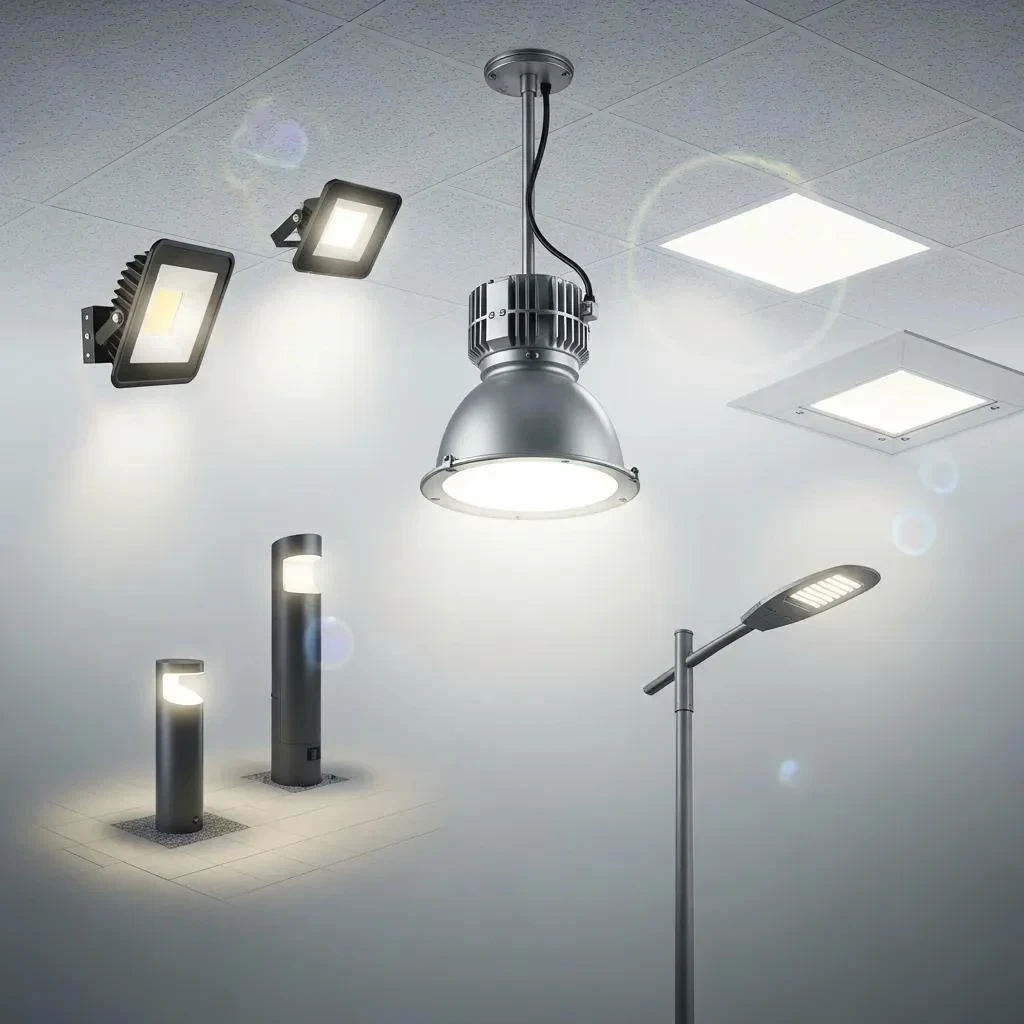
Fresno commercial spaces commonly use high bay fixtures in warehouses, LED troffers or panel lights in offices, linear LED retrofit kits for retail aisles, and purpose-built outdoor LEDs for parking and exterior lighting. These fixture types — panel lights, high-bay LEDs, troffers, parking/flood LEDs, and linear retrofit kits — are chosen for efficiency and durability. Key specs to evaluate are lumens per watt (efficacy), correlated color temperature (CCT), color rendering index (CRI), and rated life in hours; higher efficacy and CRI with a long rated life usually deliver better lifecycle economics. Choosing the right fixture for each application helps managers balance upfront cost, expected energy savings, and maintenance intervals when planning a retrofit.
How does the lighting retrofit process work for commercial spaces?
A typical retrofit follows a clear sequence: site assessment and baseline metering, design with fixture and control specifications, installation and hardware replacement, commissioning with performance verification, and scheduled maintenance or analytics for ongoing oversight. Breaking the project into phases lowers risk because each step produces tangible deliverables—layout drawings, savings projections, and commissioning reports—that stakeholders can review before moving forward. The short table below summarizes the steps, expected deliverables, and a typical timeline businesses should expect.
Assessment mapping clarifies scope, timeline, and expected outcomes:
| Phase | Deliverable | Typical Timeline |
|---|---|---|
| Site Assessment | Lighting layout, baseline kWh, and savings estimate | 1–2 weeks |
| Design & Specification | Fixture schedule, control strategy, and cost estimate | 1–2 weeks |
| Installation | Physical replacement and control wiring | 1–3 weeks (by project scale) |
| Commissioning | Measured illuminance and energy verification report | 1 week |
| Ongoing Maintenance | Performance audit schedule and remote monitoring setup | Annual or semi-annual |
This phased approach makes installations predictable and ensures each stage produces measurable outputs you can use for financing and rebate applications, which we cover next.
Fresno Commercial Lighting: Reducing Energy Use and Costs
Commercial LED lighting brings several measurable benefits: lower energy use, reduced maintenance costs, improved visual comfort, and secondary HVAC savings from lower internal heat gain. LEDs deliver more lumens per watt than fluorescent or HID sources, so you can reach the same light levels with less power. LEDs also last tens of thousands of hours, which cuts lamp replacement labor and spare parts inventory. When paired with controls, LEDs further reduce peak demand and cooling loads, improving lifecycle economics for commercial buildings.
To make purchasing decisions easier, the table below compares common fixture classes on lifespan, efficacy, and maintenance traits for typical commercial uses.
| Fixture Type | Typical Efficacy (lm/W) | Lifespan | Typical Application |
|---|---|---|---|
| LED Panel / Troffer | 100–140 lm/W | 50,000+ hours | Offices, retail |
| High Bay LED | 120–180 lm/W | 50,000+ hours | Warehouses, manufacturing |
| Linear LED Retrofit Kit | 90–140 lm/W | 40,000–60,000 hours | Aisles, merchandising |
| Parking Lot / Flood LED | 110–150 lm/W | 50,000+ hours | Exterior, security lighting |
This side-by-side view shows how components like drivers, sensors, and controls affect system performance and operating cost, helping buyers choose combinations that balance upfront investment with total cost of ownership.
How do LED upgrades reduce energy consumption and costs?
LED upgrades cut energy through three main factors: higher luminous efficacy (more lumens per watt), directional light that reduces waste, and controls that lower run-time and peak demand. For example, swapping 200 troffers from 2×32W fluorescent (around 64 W each including ballast losses) to 30 W LED troffers saves roughly 34 W per fixture. At a conservative $0.11/kWh commercial rate, running 10 hours/day for 260 days/year yields an annual energy savings estimate as follows:
- 34 W × 200 fixtures = 6,800 W saved → 6.8 kW
- 6.8 kW × 10 hours/day × 260 days = 17,680 kWh/year
- 17,680 kWh × $0.11/kWh ≈ $1,945 annual savings
Controls can boost savings by another 20–40% through vacancy/occupancy scheduling and daylight dimming, which shortens payback periods. Simple calculations like these help facility managers evaluate ROI and lifecycle costs before making capital decisions.
What environmental and productivity advantages do energy-efficient lights provide?
Energy-efficient lighting lowers greenhouse gas emissions by reducing electricity demand and can cut cooling loads, which reduces HVAC runtime and related emissions. Fewer replacements and longer fixture life also reduce waste and disposal frequency, supporting sustainability goals. On the productivity side, better color rendering and stable light levels improve visual comfort and safety—factors linked to fewer errors and higher employee well-being. Where appropriate, human-centric options like tunable white lighting can align light quality with circadian needs to support alertness and performance during work hours.
Those environmental and productivity benefits make LED upgrades more than cost-cutting measures — they’re facilities investments that improve safety, sustainability reporting, and tenant satisfaction, all of which affect long-term occupancy and operating costs.
How can Fresno businesses maximize savings with commercial lighting rebates?
Fresno businesses can shorten payback times by pairing retrofits with utility and state rebates. Common paths include prescriptive incentives that pay a fixed amount per qualifying fixture and custom programs that rebate part of measured kW or kWh reductions. Many programs require pre-approval and ask for specification sheets, before/after photos, and invoices. The table below summarizes typical rebate program types and the documentation businesses usually need.
Rebate programs vary, so verify eligibility and documentation needs before ordering equipment:
| Rebate Program Type | Eligibility | Typical Incentive |
|---|---|---|
| Prescriptive Utility Rebates | Standard LED fixtures and qualified lamps | $/fixture or $/lamp |
| Custom Programs | Projects with measured kW/kWh savings | $/kW or $/kWh saved (project dependent) |
| State & Local Grants | Eligible commercial upgrades or energy efficiency projects | Project-based awards or match funding |
What commercial lighting rebates and incentives are available in Fresno?
Local rebate sources usually include regional utilities and state programs that favor high-efficiency LEDs and controls. Prescriptive rebates offer fixed payments per eligible fixture; custom incentives base payments on measured baseline vs. post-install savings. Because program details change, check current incentive levels before procurement and consider pre-approval where available. The practical list below outlines common program elements and the documentation typically required.
Common program elements and requirements include:
- Prescriptive incentives: Manufacturer spec sheets and model numbers to confirm eligibility.
- Custom incentives: Baseline metering, engineering calculations, and post-install measured data.
- Rebate timing rules: Some programs require pre-approval before installation to qualify.
How do businesses apply for Fresno commercial lighting rebates?
Applying usually follows this sequence: identify eligible programs, confirm pre-approval rules, gather specification and baseline documentation, complete installation to program specs, and submit final paperwork with invoices and verification photos. Common mistakes include starting work before required pre-approval and submitting incomplete spec sheets, which can delay or disqualify rebates. To avoid problems, prepare a checklist—fixture spec sheets, invoices, before/after photos, and commissioning reports—and keep clear version control on electrical drawings.
Many installers help capture rebates by preparing paperwork and coordinating pre-approval. Electricians in Fresno Today assists commercial clients with rebate documentation and incentive capture as part of retrofit services, reducing administrative friction—especially for custom projects that require measurement and verification.
What smart commercial lighting systems enhance energy efficiency in Fresno?
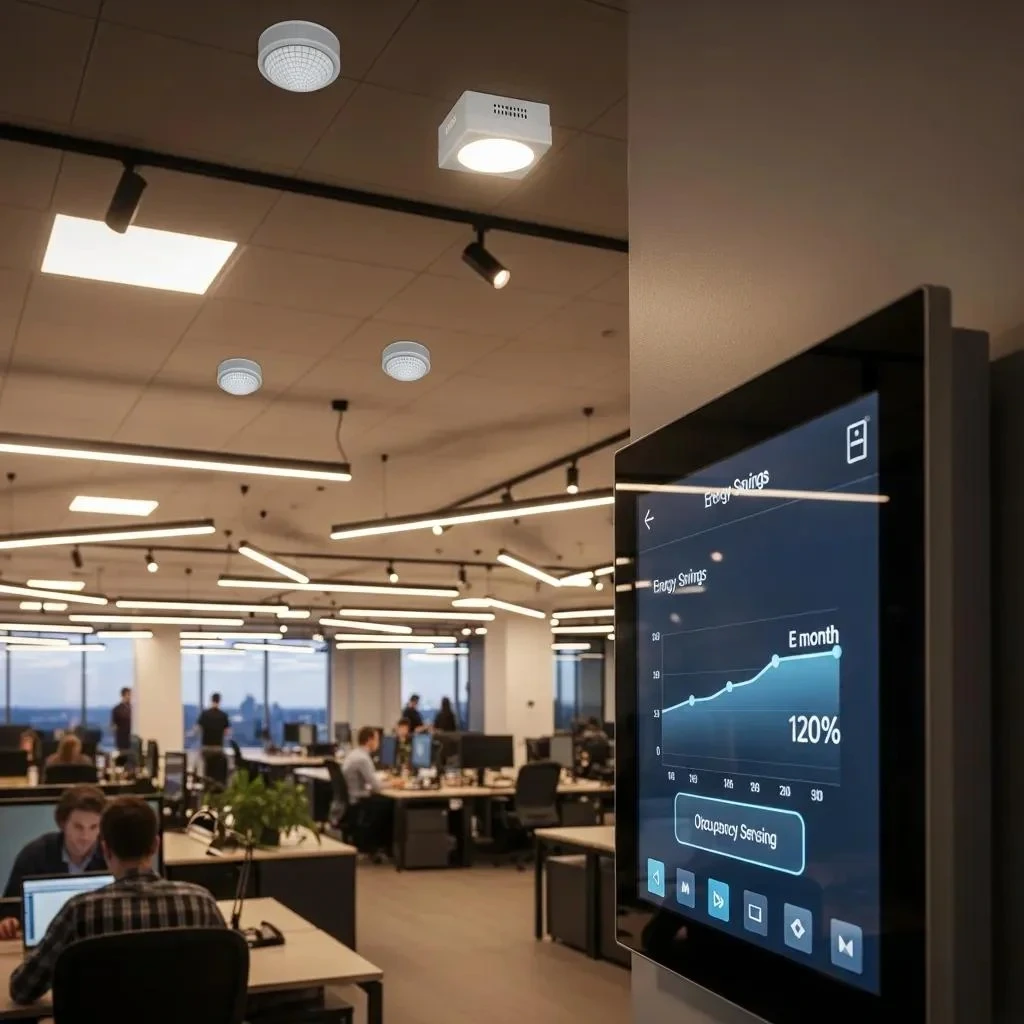
Smart lighting systems combine sensors, dimmable drivers, and networked controls to automate schedules, enable daylight harvesting, and provide analytics that keep savings on track. These systems reduce wasted light, detect failures early, and allow zone-level control for flexible operation. Integration with building management systems (BMS) via BACnet or Modbus lets lighting participate in broader optimization strategies, including demand response. Below are common control categories and when each makes sense for commercial deployments.
Smart control types are selected based on project goals and scale:
- Occupancy sensors and vacancy controls: Best for storage rooms, restrooms, and other intermittently used areas.
- Daylight harvesting and dimming: Ideal for perimeter offices and retail with changing natural light.
- Networked zone control and analytics: Recommended for campuses and large facilities needing centralized monitoring.
Balancing upfront cost with operational complexity is key: simple sensors deliver quick paybacks, while networked platforms offer persistent savings and better maintenance insight.
Which smart lighting controls and IoT integrations are ideal for commercial use?
The right controls depend on space function and retrofit limits. Occupancy sensors are low-cost, high-impact in low-use areas; daylight harvesting is useful on glazed perimeters; networked dimming and scene control fit conference rooms and retail that need flexible lighting. When a BMS integration is required, gateways supporting BACnet or Modbus provide scalable control. Consider retrofit compatibility—whether existing drivers support dimming protocols or whether wireless mesh can avoid disruptive wiring—when specifying equipment.
Picking the appropriate protocol and sensor type narrows the gap between design intent and real-world performance, so energy features actually translate into measurable kWh reductions and simpler maintenance.
How do smart systems improve energy management and user convenience?
Smart systems provide scheduled dimming, remote monitoring, fault analytics, and occupant comfort features that together sustain savings and cut maintenance. Analytics can flag failing drivers or lights before occupants notice, allowing targeted service visits instead of routine lamp rounds. Convenience features—zone scenes, programmable schedules, and mobile control—let managers tune light levels by task or time. These operational benefits make smart systems a good fit for organizations that want both energy performance and a better occupant experience.
When lighting is connected—fixtures → sensors → gateway—operators gain actionable insights that support ongoing commissioning and help ensure savings last after installation.
Why choose Electricians in Fresno Today for your commercial lighting installation?
Electricians in Fresno Today is a local firm delivering commercial lighting retrofits and energy-efficient electrical solutions across Fresno County. We emphasize licensed electricians who follow NEC and NFPA requirements, transparent pricing with risk-free estimates, and partnerships with trusted manufacturers. We also provide 24/7 emergency electrical services to handle issues that could affect lighting performance and safety. For businesses that want dependable local execution, these qualities make it easier to compare providers.
The company’s unique value points focus on compliance, trusted brands, clear estimates, and reliable availability:
- Local, licensed crews: Familiar with local code interpretation and permitting.
- Trusted product selection: We specify established manufacturers for predictable performance and warranty support.
- Transparent pricing & estimates: Risk-free estimates list models, control strategies, and projected savings so owners can compare scenarios.
Contacting a licensed local electrician early helps align fixture selection, rebate eligibility, and permitting to shorten timelines and reduce project risk; Electricians in Fresno Today can be reached at +1-844-335-0814 for estimates and audit scheduling.
How does local expertise ensure NEC and NFPA compliance?
Local licensed electricians know how NEC and NFPA rules apply to commercial retrofits, including branch circuiting, emergency lighting, and egress illumination. During design and installation, common code checkpoints include verifying circuit capacity, emergency lighting transfer methods, fixture labeling, and maintaining required egress illuminance. That compliance know-how reduces the chance of failed inspections or costly rework and eases permitting by providing code-compliant plans and documentation. Skilled installers also record compliance steps and produce commissioning evidence that supports safety and incentive applications.
Addressing code alignment early lowers downstream costs and helps projects meet both safety requirements and incentive program rules without expensive changes later.
What trusted brands and transparent pricing does the company offer?
Electricians in Fresno Today partners with recognized lighting manufacturers to specify fixtures and drivers that meet performance thresholds and warranty expectations. Our transparent pricing includes risk-free estimates that list fixture models, control strategies, and projected savings so decision makers can compare options. Manufacturer warranties reduce lifecycle risk, and clear proposals help avoid scope creep during installation. This transparency ties upfront costs to expected energy and maintenance outcomes so stakeholders can evaluate total cost of ownership.
Itemized proposals that link brand selections to energy and maintenance expectations help stakeholders make decisions that align with long-term facility goals.
What are real Fresno business success stories with energy-efficient lighting?
Local case summaries show measurable savings and realistic paybacks when LED upgrades are combined with controls and solid project management. Typical anonymized results from small to mid-sized Fresno businesses show energy drops in the 40–70% range depending on prior lighting and the depth of control integration. Paybacks often run 18–36 months for fixture-only conversions and can shorten with prescriptive rebates and demand-reduction incentives. The table below summarizes three representative outcomes with before/after energy and payback estimates.
Representative project outcomes illustrate measurable returns:
| Project Scale | Before kWh/year | After kWh/year | Annual $ Saved | Estimated Payback |
|---|---|---|---|---|
| Small office (100 fixtures) | 40,000 | 18,000 | $2,420 | ~24 months |
| Warehouse (200 high bays) | 120,000 | 48,000 | $7,920 | ~20 months |
| Retail center (mixed) | 80,000 | 36,000 | $4,840 | ~22 months |
Which case studies demonstrate measurable energy savings and ROI?
One common example is a medium-sized warehouse that replaced HID high bays with high-efficacy LED high bays and added zoned occupancy controls. Lighting dropped from about 120,000 kWh/year to roughly 48,000 kWh after the retrofit and tuning, yielding significant annual savings and a payback under two years after incentives. Another case is an office campus that swapped fluorescent troffers for LED panels and added daylight dimming at the perimeter; measured savings were about 55% with improved occupant satisfaction. These examples show how project scope, control strategy, and accurate measurement drive ROI.
Documenting before/after kWh and providing commissioning reports is essential to validate savings and support capital planning for other facilities.
How do maintenance and audits support long-term lighting performance?
Maintenance and periodic audits preserve initial performance by checking control setpoints, replacing worn components, and comparing power use to projections. Best practices include annual or semi-annual audits that measure illuminance, spot-check fixture output, and review analytics from networked controls for drift or failures. Maintenance contracts with fast response for fixture or driver issues protect savings by preventing dark fixtures and keeping schedules on track. Remote monitoring in many smart systems reduces manual checks and enables predictive maintenance before occupants report problems.
Long-term savings rely on solid commissioning, regular verification, and responsive maintenance—steps that extend the lifecycle benefits seen in initial ROI estimates.
Frequently Asked Questions
1. What factors should businesses consider when planning a lighting retrofit?
When planning a retrofit, consider current lighting conditions, how and when spaces are used, and the lighting needs for each area. Evaluate fixture options for efficacy and useful life, and check whether smart controls can improve savings. Budget, available rebates, permitting, and local code requirements also matter—planning for these keeps the project on time and on budget.
2. How can businesses ensure compliance with local codes during a retrofit?
Engage licensed electricians who know the National Electrical Code (NEC) and NFPA standards and understand local permitting. A thorough site assessment and clear documentation—plans, specs, and test reports—help ensure compliance. Regular communication with inspectors and following established code checkpoints minimize inspection risk and rework.
3. What are the long-term maintenance considerations for energy-efficient lighting systems?
Long-term care includes scheduled performance audits, timely replacement of degraded parts, and tracking energy use against expected savings. Annual or semi-annual checks, plus remote monitoring where available, help spot issues early. A maintenance plan that includes quick-response service preserves savings and occupant satisfaction.
4. How do energy-efficient lighting upgrades impact employee productivity?
Upgraded lighting improves visual comfort, reduces eye strain, and can improve color rendering—factors that help focus and reduce errors. Human-centric lighting, like tunable white, can better match circadian needs and support alertness during the workday, which contributes to overall well-being and productivity.
5. What are the common challenges businesses face when applying for lighting rebates?
Common challenges include meeting pre-approval rules, compiling complete documentation (spec sheets, photos, invoices), and correctly measuring savings for custom programs. Starting work before approval or submitting incomplete applications are frequent causes of delays. Working with experienced contractors who handle rebate paperwork reduces risk.
6. What role do smart lighting systems play in energy management?
Smart systems automate schedules, enable daylight harvesting, and provide analytics to keep performance steady. They reduce wasted light, support demand response, and integrate with building management systems for broader energy strategies. That combination improves efficiency and makes ongoing maintenance easier.
7. How can businesses measure the success of their lighting retrofit projects?
Measure success by tracking energy use, cost savings, and maintenance frequency before and after the retrofit. Conduct pre- and post-install audits, review analytics from controls, and gather occupant feedback on comfort and productivity. Documenting these metrics over time shows ROI and informs future efficiency projects.
DISCLAIMER This site is designed to assist homeowners in connecting with electrician service contractors. All electrical contractors are independent and this site does not warrant or guarantee any work performed. It is the responsibility of the homeowner to verify that the hired electrical service contractor furnishes the necessary license and insurance required for the work being performed. All persons depicted in a photo may be actors or models and not contractors listed on this site.