

Expert Power Distribution Solutions for Fresno Businesses
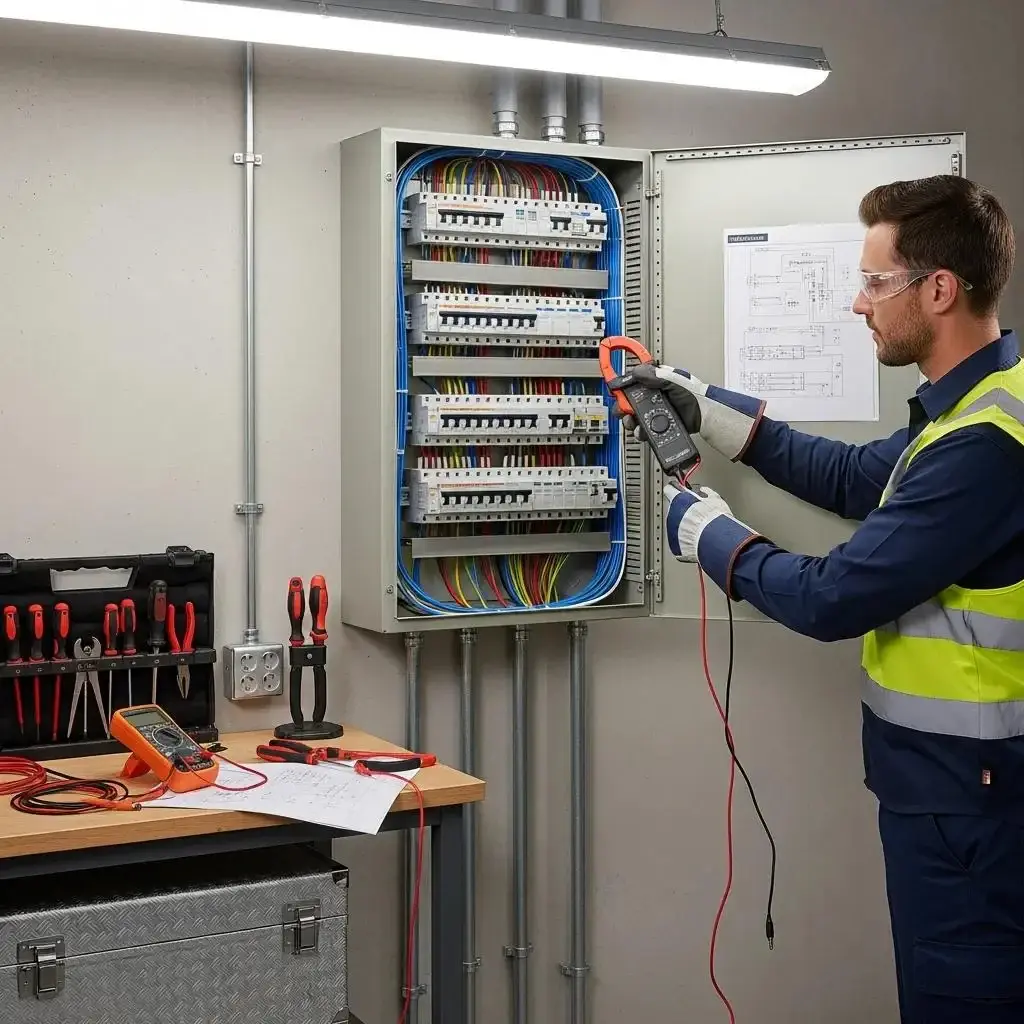
Optimizing Commercial Electrical Load Balancing in Fresno
Load balancing for commercial electrical systems evens current across a building’s three phases to stabilize voltage, cut losses, and protect equipment from overheating. Fresno businesses dealing with high energy bills, frequent breaker trips, or motor problems see real benefits when three-phase systems are properly balanced. Below we explain what load balancing is, why it matters for Fresno properties, and how focused steps — from panel upgrades to thorough audits and ongoing monitoring — deliver measurable savings and greater reliability. You’ll learn how the right panel work and certified parts help balancing, which audit methods reveal phase issues, and which maintenance and demand-side tactics keep distribution steady. Practical lists, comparison tables, and real-world examples make it easier for facility managers, property owners, and operations teams to decide and act.
What is Commercial Electrical Load Balancing and Why Does It Matter for Fresno Businesses?
Load balancing means distributing electrical demand so each of the three service phases carries similar current. That lowers neutral currents and keeps system voltage stable. Technically, balancing is done by moving circuits, adding subpanels, or fitting monitoring and corrective devices so motors, lighting, and HVAC draw evenly across phases. The benefits are lower I²R losses and fewer nuisance trips.
For Fresno operations where uptime and energy costs matter, balancing improves reliability, reduces peak-demand exposure, and helps meet NEC expectations. Spotting imbalance early prevents thermal hotspots and equipment wear — which reduces maintenance and replacement costs over time.
Many imbalance indicators are subtle but actionable, so regular spot checks and audits are worth the investment. The next section shows how balanced distribution improves power quality and day-to-day operations.
How Does Electrical Load Balancing Improve Power Distribution in Commercial Settings?
Load balancing improves distribution by matching current draw across phases through circuit reassignment, adding breakers or subpanels, or installing load monitoring to guide fixes. Evenly distributed currents minimize voltage sag on heavily loaded phases and keep buses and transformers operating near their ratings, which reduces localized overheating and lengthens component life.
For example, a three-phase motor bank with one overloaded phase can see a 10–20% rise in local heating. Redistributing feeder loads staggers startup currents, cuts that heating, and reduces nuisance trips. Balancing also lowers neutral conductor heating and, when paired with power factor correction, improves overall power quality — a more stable environment for sensitive equipment.
Understanding these mechanics makes the operational risks of unaddressed imbalance easier to see.
What Are the Risks of Unbalanced Electrical Loads for Fresno Commercial Buildings?
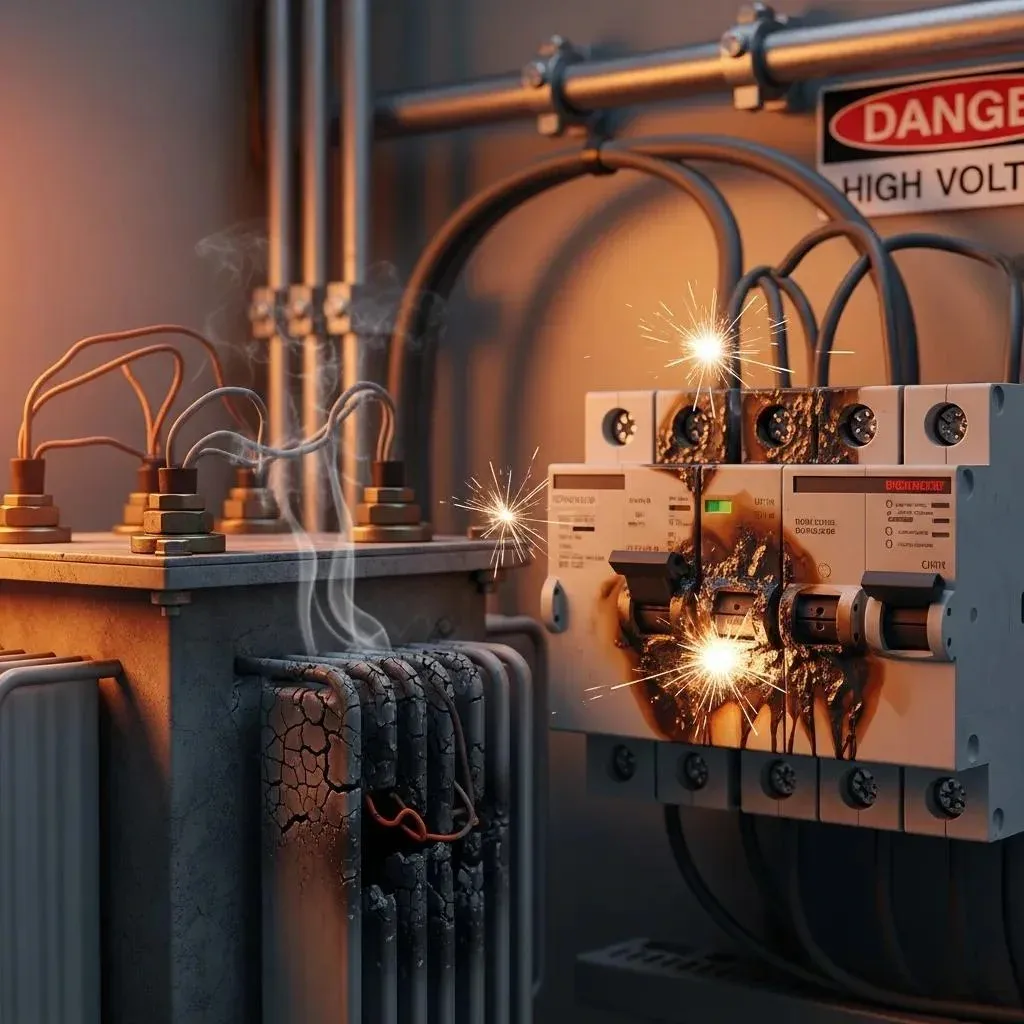
Unbalanced loads bring real risks: equipment overheating, premature motor and transformer failure, higher energy use, and safety issues that can trigger NEC noncompliance. Thermal stress speeds insulation breakdown and bearing wear in motors, while elevated neutral currents can overload neutrals and, in extreme cases, raise fire risk. Financially, imbalance increases I²R losses and can drive up utility demand charges, so operations end up paying more. Operationally, frequent breaker trips and downtime hurt productivity and customer service.
These hazards are why timely audits and upgrades matter — which we cover next when we look at panel upgrades and component choices.
How Can Fresno Commercial Electrical Panel Upgrades Support Effective Load Balancing?
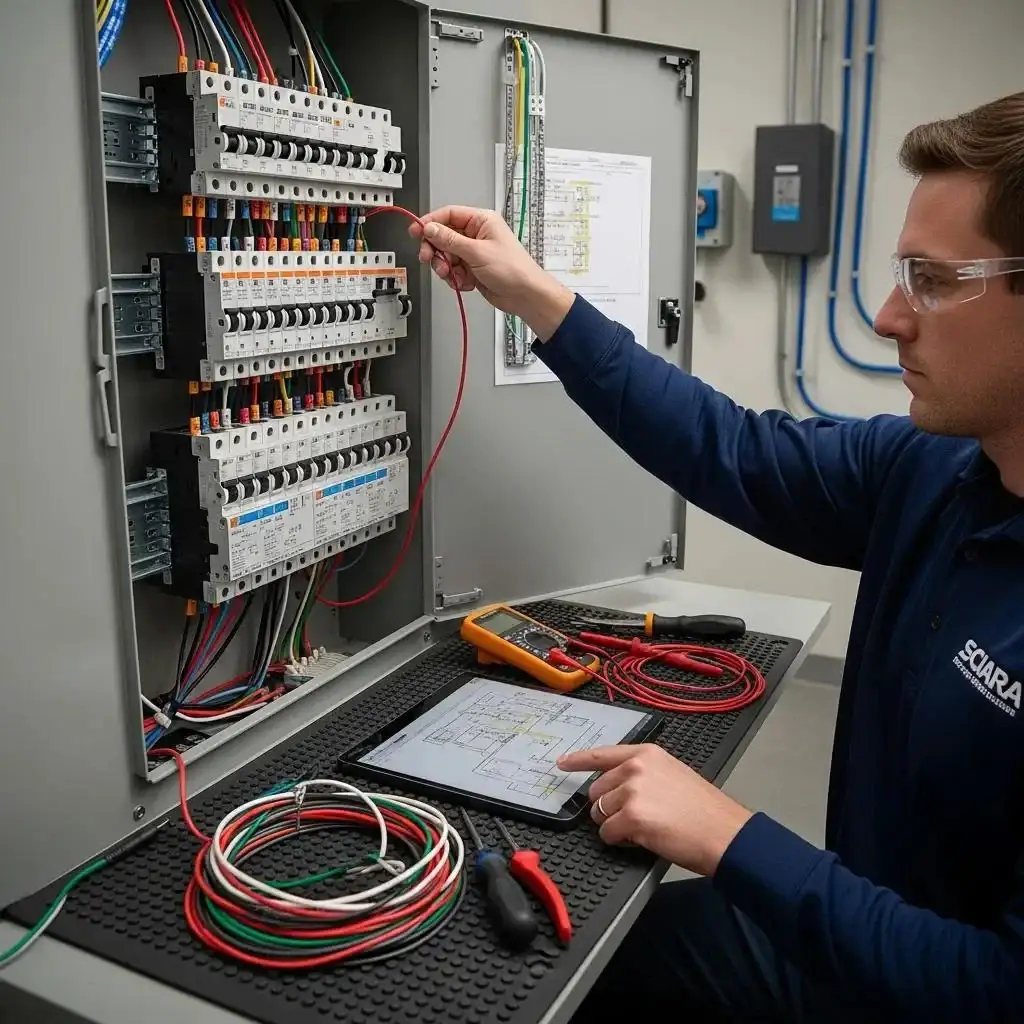
Panel upgrades make balancing possible by adding capacity, improving breaker layout flexibility, and allowing modern monitoring and protection devices to be installed. Common steps include replacing outdated main panels, adding subpanels for heavy loads, and retrofitting modern breakers that support selective coordination and easier redistribution. These changes create clear points to rebalance circuits and install CTs for ongoing diagnostics, supporting both immediate fixes and future monitoring.
Upgrades also help meet NEC requirements and produce safer, more serviceable layouts that reduce the complexity of future balancing work.
Below is a practical component-level breakdown showing how specific parts support balancing and why choosing certified brands matters.
| Component | Attribute | Typical Use / Benefit |
|---|---|---|
| Main Panel (Siemens/Eaton) | Capacity and modular space | Supports larger service sizes and makes circuit reconfiguration easier for balanced distribution |
| Circuit Breakers (Siemens/Eaton) | Trip characteristics and coordination | Provides reliable selective protection and reduces nuisance trips when loads are redistributed |
| Surge Protection | Transient suppression | Shields motors and controls from transient events that can happen during reconfiguration |
| Current Transformers (CTs) | Measurement accuracy | Deliver phase-by-phase current data for monitoring and load-balancing analysis |
Upgrading with certified components lowers retrofit risk and eases inspections. The checklist below helps decide when an upgrade is the right choice.
When Should Businesses Consider Upgrading Their Electrical Panels for Load Management?
Consider a panel upgrade when operational signs — frequent breaker trips, flickering lights, or no room for new breakers — show the system can’t safely handle added loads. Growth events such as new equipment, higher HVAC demand, or expanded production often push panels to their limits. Audits commonly find single-phase overloading that panel work can resolve.
The usual decision flow is: audit to identify imbalance and capacity gaps, recommend targeted upgrades, and implement staged improvements to limit downtime and cost. Prioritize safety-first repairs (for example, replacing aged bus assemblies or fixing corroded connections) so balancing rests on a reliable foundation and stays NEC-compliant.
Picking trusted brands and standard components also simplifies procurement and long-term maintenance planning, as we explain next.
Which Trusted Brands and Components Are Used in Commercial Panel Upgrades in Fresno?
Local commercial projects frequently specify manufacturers like Siemens and Eaton for panels and breakers because their modular designs, coordination options, and parts availability make reconfiguration straightforward. Properly rated main and feeder breakers, surge protectors, and bus bars from these brands support reliable rebalancing while keeping selective coordination intact. Using certified parts eases inspections and lets licensed technicians document ratings for future audits. Clear pricing and professional installation by licensed crews reduce procurement uncertainty and help businesses plan both capital and operating costs.
Choosing approved components ties the upgrade scope to lasting, maintainable balancing outcomes — which leads directly to measurable benefits discussed next.
What Are the Key Benefits of Implementing Electrical Load Balancing for Fresno Businesses?
Balanced systems deliver measurable wins: energy savings, longer equipment life, safer operation, and better reliability — all of which improve the bottom line. Reducing current imbalance lowers I²R losses and energy waste, cuts equipment failures and replacement expenses, and reduces downtime from nuisance trips or thermal events. Balancing also helps meet NEC rules by preventing neutral overload and overheating, which reduces inspection risks. Below are the main benefits arranged for quick assessment.
- Energy Savings: Even phases lower resistive losses and can reduce monthly energy costs.
- Extended Equipment Life: Less thermal cycling extends motor and transformer service life and lowers replacement frequency.
- Improved Safety & Compliance: Lower neutral heating and even loading support NEC compliance and safer infrastructure.
The table below compares benefit categories, how they work, and typical impacts to help prioritize work.
| Benefit Category | Mechanism | Typical Impact |
|---|---|---|
| Energy Savings | Reduced I²R losses from balanced currents | 3–8% reduction in distribution losses (site dependent) |
| Equipment Lifespan | Lower thermal stress and fewer overload events | Extended motor/transformer life by years; fewer repairs |
| Safety & Compliance | Lower neutral currents and balanced voltage | Reduced inspection concerns and hazard exposure |
These improvements translate into ROI when paired with targeted upgrades and monitoring — which we quantify in the audit and maintenance sections that follow.
How Does Load Balancing Enhance Energy Efficiency and Reduce Operational Costs?
Balancing reduces phase-to-phase voltage variation and lowers resistive heat losses (I²R) in conductors and equipment windings. When you combine balancing with power factor correction, apparent power drawn from the utility drops and demand charges can fall — a big driver of commercial bills. Correcting phase imbalance and improving power factor on large motor loads can reduce monthly demand peaks and lower billed demand, depending on your load profile. In short, balancing creates direct energy savings and reduces peak-driven costs.
Those savings also strengthen the case for proactive maintenance, which protects efficiency gains over time.
In What Ways Does Load Balancing Extend Equipment Lifespan and Ensure Safety Compliance?
Even loading reduces uneven magnetic forces, thermal gradients, and mechanical stress inside motors and transformers. That slows insulation breakdown and bearing wear, cutting premature failures. Fewer overloads and nuisance trips mean less thermal cycling and less downtime, preserving capital assets. For compliance, balanced currents reduce neutral overloading and heat, addressing common NEC inspection concerns. Regular maintenance and documented balancing actions also show inspectors you’re managing risk proactively.
How Do Commercial Energy Audits Identify Load Balancing Needs in Fresno Businesses?
Audits reveal balancing needs through structured data collection, targeted monitoring, analysis, and prioritized recommendations. Audits typically start with site documentation and circuit mapping, move to short- and long-term load logging across phases, use thermal imaging to find hotspots, and finish with power quality analysis to spot harmonics or power-factor issues. The result is a prioritized plan that can include circuit redistribution, panel upgrades, monitoring installs, or demand-side measures with estimated savings and costs. Audit reports give facility teams an evidence-based roadmap to improve distribution and energy performance.
Audit techniques and outcomes are usually summarized in tables and lists so stakeholders can act quickly on findings.
| Audit Technique | Measured Attribute | Actionable Outcome |
|---|---|---|
| Load logging (phase currents) | Phase-to-phase current discrepancies | Circuit redistribution or subpanel additions to rebalance loads |
| Thermal imaging | Connection hotspots and overloaded conductors | Tighten or repair connections; replace stressed components |
| Power quality analysis | Harmonics, power factor, voltage stability | Recommend filters, power factor correction, and harmonic mitigation |
Once data is collected, auditors prioritize fixes by safety and ROI — a process we cover next.
What Techniques Are Used in Energy Audits to Detect Unbalanced Loads?
Audits rely on load logging with clamp meters or CTs to record per-phase current through representative cycles and reveal persistent imbalances. Thermal imaging finds overheated connections or stressed bus sections, and power quality analyzers capture harmonics and power-factor problems that can hide or worsen imbalance symptoms. Combining these methods gives a complete view: instantaneous imbalances, thermal effects, and long-term power-quality trends — enabling precise, actionable recommendations.
How Can Audit Findings Guide Load Balancing and Energy Optimization Strategies?
Audit results map measured issues to specific remedies: reassign circuits, add subpanels, upgrade breakers, or install monitoring — ranked by safety priority and expected ROI. The usual framework fixes urgent safety items first (hot connections), then high-impact efficiency work (rebalance motor feeders), and finally staged investments like EMS integration. Auditors commonly estimate payback for each recommendation so decision-makers can sequence projects to match budgets. This method turns data into implementable projects that improve reliability and control costs.
What Maintenance and Monitoring Services Ensure Long-Term Load Balancing Performance?
Keeping distribution balanced takes routine preventive maintenance and continuous monitoring to catch drift, load shifts, or component wear before they become problems. Preventive work includes periodic thermal scans, torque and connection checks, breaker testing, and logging changes after equipment is added — all aimed at catching imbalance early. Monitoring options range from CT-based meters feeding cloud dashboards to EMS that alert staff when phases deviate and trigger work orders. Together, these services protect balance, lock in efficiency gains, and cut emergency repairs.
Below is a short maintenance checklist and a table of monitoring technologies to help plan ongoing care.
- The maintenance checklist highlights routine tasks needed to keep distribution balanced.
- Regular thermal imaging inspections: Find hotspots and loose connections before they fail.
- Breaker testing and recalibration: Keep protective devices operating predictably under changing loads.
- Load documentation after changes: Record circuit moves and new equipment to prevent accidental imbalances.
These routine steps reduce failures and guide targeted corrective work, which is backed by the technologies described next.
How Does Preventative Electrical Maintenance Support Balanced Power Distribution?
Preventive maintenance addresses the physical causes of imbalance — loose terminations, aging components, or undocumented circuit changes — before they create thermal stress or failures. Scheduled torqueing and infrared inspections find high-resistance terminations that heat phases, while breaker testing verifies trip characteristics after loads are changed. Keeping accurate circuit records makes future balancing predictable and repeatable, and maintenance trends help decide when to upgrade or add monitoring.
Routine maintenance is most effective when combined with real-time monitoring, described below.
What Technologies Are Used for Ongoing Load Monitoring and Diagnostics in Fresno?
Ongoing monitoring uses CTs, power quality meters, and EMS dashboards to show live and historical phase currents, harmonics, and power factor so teams can act quickly when imbalance appears. CT-based submetering on feeders feeds cloud dashboards that visualize trends and create service tickets. Power quality meters add harmonic and voltage-stability diagnostics to separate imbalance from distortion. Paired with scheduled maintenance, these tools create a closed-loop system that preserves balance and supports cost-effective operations.
After establishing monitoring and maintenance, demand-side management can extend the value of balancing. Facilities that need help implementing these steps can work with qualified service providers.
If you’re ready to act, Electricians in Fresno Today provides commercial panel installations and upgrades, licensed technicians, NEC-focused compliance, transparent pricing, and 24/7 emergency electrical repairs. We combine assessments and implementation so audit recommendations become completed projects, safely and on schedule.
How Does Demand-Side Management Integrate with Commercial Electrical Load Balancing?
Demand-side management (DSM) complements load balancing by lowering peak demand and shifting flexible loads so phase loading stays even while total consumption drops during critical periods. DSM tactics — scheduled equipment cycles, staggered motor starts, or automated load shedding — are coordinated with balancing plans so shifted demand doesn’t overload a single phase. Tying DSM to monitoring lets facilities respond to real-time imbalance alerts and participate in utility demand-response programs that reward peak reduction. Together, DSM and balancing provide immediate operational relief and longer-term cost control.
Practical deployment is usually driven by simple strategies and available incentives, outlined below.
What Load Shedding and Peak Demand Strategies Complement Load Balancing?
Load shedding and peak-demand strategies use prioritized circuit control and intelligent scheduling to lower demand without overloading phases. Automated shedding can temporarily disconnect noncritical feeds during peaks, while staggered start sequences for HVAC and motors spread inrush currents over time and phases to prevent localized overload. Shiftable loads — nonessential lighting, water heaters, or discretionary production — can be scheduled in lower-demand hours to smooth phase currents. When managed by EMS controls these tactics act dynamically to preserve balance and minimize disruption.
Many of these measures qualify for utility incentives, which helps with financing.
How Do Utility Incentives Encourage Load Management in Fresno Commercial Buildings?
Utility and state programs often offer rebates, demand-response payments, or performance incentives that reduce the cost of audits, monitoring hardware, and other load-management investments. Audits can identify eligible measures, and documented performance improvements support rebate or demand-response participation. Practically, map audit recommendations to likely incentive categories to estimate net project costs and payback. Using incentives lowers upfront capital barriers and speeds the adoption of balancing, monitoring, and DSM measures.
This completes the technical path from diagnosis to funded implementation and highlights practical next steps for Fresno businesses ready to improve distribution and efficiency.
Frequently Asked Questions
What are the signs that my commercial building needs electrical load balancing?
Look for frequent breaker trips, flickering lights, or noticeable voltage swings. Overheating equipment or unexpected spikes in your energy bill are also warning signs. Regular audits and monitoring pick up these issues early so you can address them before they cause bigger problems.
How often should businesses conduct energy audits for load balancing?
At minimum, schedule an audit once a year. Do audits sooner if you add major equipment, expand operations, or experience electrical issues. Also run an audit after any big electrical upgrade to confirm the system remains balanced and efficient.
Can load balancing improve the lifespan of electrical equipment?
Yes. Evenly distributed loads reduce overheating and thermal cycling, which cuts wear on motors, transformers, and other gear. Less stress means fewer breakdowns and lower maintenance and replacement costs.
What role does preventative maintenance play in load balancing?
Preventive maintenance is essential. Regular inspections, thermal imaging, and connection checks catch loose terminations and degraded parts before they create imbalance. Staying proactive preserves efficiency, reduces downtime, and helps you meet safety standards.
How can businesses integrate demand-side management with load balancing?
Combine DSM tactics — scheduled cycling, staggered motor starts, and controlled load shedding — with your balancing plan. Tie these strategies to monitoring and EMS controls so shifted loads don’t overload a single phase. This lets you reduce peaks while maintaining even phase loading.
What are the financial benefits of implementing electrical load balancing?
Balancing lowers I²R losses and improves energy efficiency, which can reduce monthly bills. It also cuts equipment failures and replacement costs and lowers inspection risk by helping meet NEC requirements. Altogether, these savings improve operational reliability and the bottom line.
DISCLAIMER This site is designed to assist homeowners in connecting with electrician service contractors. All electrical contractors are independent and this site does not warrant or guarantee any work performed. It is the responsibility of the homeowner to verify that the hired electrical service contractor furnishes the necessary license and insurance required for the work being performed. All persons depicted in a photo may be actors or models and not contractors listed on this site.