

Easy Fresno Residential Electrical Troubleshooting Tips
Easy Fresno Home Electrical Fixes
Residential electrical troubleshooting is the process of identifying, isolating, and resolving faults in a home electrical system to restore safe, reliable power. Understanding basic troubleshooting helps Fresno homeowners reduce fire risk, prevent appliance damage, and save on unnecessary service calls by isolating simple issues before calling a professional. This guide explains common symptoms such as flickering lights, tripping breakers, dead outlets, and burning smells, and it lays out safe DIY checks, clear decision rules for when to call a licensed electrician, and practical safety upgrades to consider. You will learn step-by-step safe checks, red-flag indicators of dangerous wiring or panel problems, and how to evaluate local electrical services without being swamped by technical jargon. The article covers six focused sections: common problems, when to call a licensed electrician, safe homeowner troubleshooting steps, essential safety tips, and how to choose the right electrician including typical cost estimates as of 06/2024. Throughout, the content integrates Fresno-relevant diagnostic tools and entities—like multimeters, thermal imaging, circuit tracers, licensed electricians, and service panel concerns—so you can act confidently and safely.
What Are the Most Common Residential Electrical Problems in Fresno?
Common residential electrical problems in Fresno include flickering lights, circuit breakers that trip repeatedly, dead or intermittently working outlets, partial power loss to rooms, burning or overheated smells near outlets, and overloaded or faulty wiring. These issues often arise from loose connections, overloaded circuits, aging panels, or failing fixtures and can progress from nuisance to hazard if ignored. Early identification reduces the chance of electrical fires and helps prioritize repairs; addressing symptoms quickly protects both property and occupants. The next paragraphs detail how to spot two of the most frequent issues and what simple steps homeowners can take before escalating to professional help.
Homeowners often notice flickering lights first because flicker is visible and recurring, but flicker has multiple causes and varying urgency. Flicker limited to a single fixture typically indicates a bad bulb or loose lamp socket, while flicker across multiple fixtures suggests a circuit or service issue. Differentiating fixture-level vs circuit-level problems lets you decide whether to perform safe checks or call an electrician, and the steps below explain that progression.
Before discussing circuit breaker behavior, a quick reference table helps triage common Fresno electrical symptoms and safe immediate actions to take while you arrange a full diagnosis.
Different common problems require different immediate actions and severity triage.
| Problem | Symptom | Likely Cause | Immediate Safe Action |
|---|---|---|---|
| Flickering lights | Single fixture or multiple lights dim/flash | Loose bulb/fixture, voltage drop, loose neutral | Replace bulb and tighten fixture; if multiple lights flicker, switch off affected circuit and call a pro |
| Circuit breakers tripping | Repeated trips or breaker warm to touch | Overload, short circuit, ground fault | Unplug high-load devices, reset breaker once; if it trips again, leave off and call electrician |
| Burning smell or scorch marks | Odor near outlets, discoloration | Overheated connection, arcing, failed device | Power down circuit at main if safe; evacuate if smoke or fire risk and call emergency services |
| Dead or intermittent outlets | No power or intermittent power | Loose wiring, GFCI trip, failed outlet | Test/reset nearby GFCI, try another device; stop if outlet heats or sparks |
This table helps you quickly assess immediate safety and whether to perform a controlled check or wait for a professional inspection. Understanding this triage leads naturally into focused checks for specific symptoms like flicker and breaker behavior.
How to Identify Flickering Lights and Their Causes
Flickering lights occur when the electrical supply to a fixture fluctuates, and the cause can range from a failing bulb to a dangerous loose neutral at the panel. Start by swapping the bulb for a known-good one and tighten the fixture; if flicker persists, check other lights on the same circuit to determine whether the issue is localized or systemic. Use a non-contact voltage tester around the fixture and switch only if you are comfortable with basic tools; avoid touching live parts and stop immediately if you detect heat, burning smell, or visible arcing. Flicker that coincides with large appliance startup (HVAC, refrigerator) often points to voltage drop or undersized wiring, while random or worsening flicker suggests degraded connections or panel problems. If fixture-level checks do not resolve the flicker, arrange a professional diagnostic that may include circuit tracing or thermal imaging to find hot connections before they cause a fire.
Why Do Circuit Breakers Keep Tripping and How to Diagnose Them?
Circuit breakers trip to interrupt dangerous current flow caused by overloads, short circuits, or ground faults, and diagnosing the trip type determines the safe next steps for homeowners. An overload occurs when many devices draw power on the same circuit; start by unplugging nonessential loads and resetting the breaker once. If a breaker trips immediately after reset or produces a burning smell, that indicates a short or arcing condition and requires leaving the breaker off until a licensed electrician inspects the system. To identify which circuit is affected, label breakers by testing one room at a time and note which devices cause trips; this creates an inventory that helps a pro pinpoint problem circuits faster. Repeated tripping accompanied by warm breakers, buzzing, or discoloration at the panel are red flags that warrant immediate professional intervention and may indicate failing breakers or obsolete panel components.
When Should You Call a Licensed Electrician for Electrical Troubleshooting in Fresno?
Knowing when to call a licensed electrician protects you from shock, fire, and code violations while ensuring the root cause gets fixed correctly. Call a licensed electrician immediately for burning smells, visible sparking or arcing, repeated breaker trips after basic load reduction, hot electrical panels, partial power loss across a room, or any situation where wiring is exposed or insulation is damaged. Scheduled service is appropriate for non-urgent tasks like panel upgrades, outlet additions, or suspected aluminum wiring, whereas emergency response is needed for active smoke, fire, or total loss of power. A licensed electrician will diagnose with calibrated tools—multimeter for voltage checks, thermal imaging to spot hot connections, and circuit tracers to map circuits—then provide safe repairs, permit guidance, and code-compliant solutions. Understanding these distinctions lets you choose between immediate emergency help and a planned diagnostic visit that can include permitable repairs and safer long-term fixes.
When evaluating whether an issue is an emergency, use this quick decision checklist to decide if immediate professional help is required.
- Burning smell near outlets, visible smoke, or sparks: call emergency service.
- Repeated breaker trips after unplugging devices: call a licensed electrician.
- Partial power loss to multiple rooms or frequent flicker across circuits: schedule immediate diagnosis.
- Single dead outlet with no heat and a tripped GFCI: try resetting GFCI first, then call if it won’t hold.
This decision list clarifies emergency triggers and non-emergency actions so homeowners can respond safely while awaiting professional assistance. The next section explains risks of DIY repairs and what to expect from emergency electricians when they arrive.
Local professional troubleshooting services in Fresno typically provide both emergency response and scheduled diagnostics; expect a licensed electrician to perform visual inspection, voltage and continuity testing, thermal scans, and circuit tracing during a diagnostic visit. These providers commonly offer scope-of-work proposals and written estimates, and they can pull permits when repairs alter wiring or replace service panels. When you call for emergency help, technicians prioritize isolating hazards, securing the panel, and recommending safe interim measures until full repairs can be completed. Keep in mind that details like arrival time and emergency fees vary by provider, so clearly describe symptoms when you call and ask what immediate steps to take while you wait.
What Are the Risks of DIY Electrical Repairs at Home?
DIY electrical repairs expose homeowners to serious risks including electric shock, fire, and code violations; these hazards increase when work involves service panels, meter loops, or concealed wiring. Common DIY mistakes include failing to turn off the correct circuit, miswiring neutral and hot conductors, and using undersized wire or improper connectors that overheat under load. Insurance and building code compliance are also at stake: improper repairs can void coverage and require costly rework by a licensed electrician later. For small tasks like swapping a light fixture or resetting a GFCI, DIY can be appropriate if done safely and within local code, but any work beyond simple replacement—such as running new circuits, altering panels, or replacing aluminum wiring—should be left to a licensed professional. Recognizing these risks helps homeowners make safer decisions and avoid compounding the original problem.
Indeed, ensuring electrical wiring is safe and compliant with established codes is paramount for protecting both property and occupants, underscoring the necessity of professional expertise.
Electrical Wiring Safety & Code Compliance for Homes
Electrical wiring/cabling form a major part in the above mentioned installation works. Electrical wiring/cabling must be reasonably safe to persons and property. Installations, alteration, or extension of Electrical wiring/cabling systems conforming to the provisions of this Code shall be deemed to be reasonably safe to persons and property.
Understanding the Role of Electrical Contractors
Which Emergency Electrical Services Are Available in Fresno?
Emergency electrical services in Fresno typically cover scenarios like sparking outlets, burning smells, partial or total power loss, and panels that emit smoke or heat; technicians respond to secure the scene and stop further damage. When you call emergency services, expect a rapid safety triage: isolation of the affected circuit, identification of hot or arcing components, temporary fixes to prevent immediate danger, and recommendations for full repairs or replacement. Typical on-site actions include shutting down the main or affected breaker, performing thermal imaging to locate overheating connections, and stabilizing circuits until parts arrive or a scheduled follow-up can be completed. While arrival times and emergency rates vary, technicians will advise immediate safety steps to take, such as turning off specific breakers or appliances and evacuating if smoke or flame is present. Understanding these services lets homeowners act decisively during an electrical emergency and communicate clearly with responders.
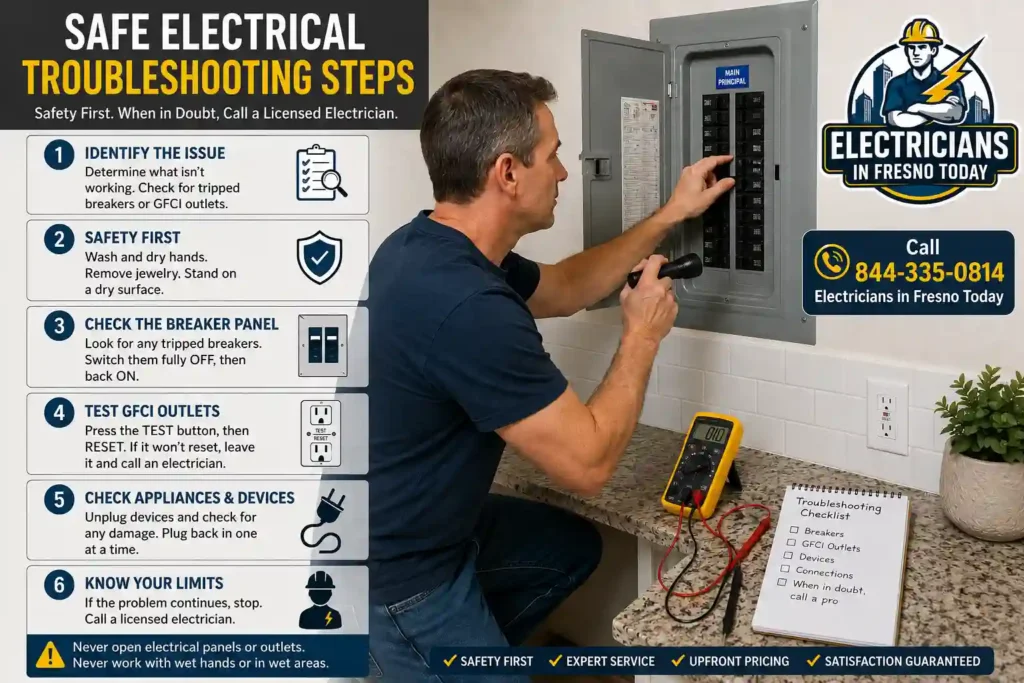
How Can Fresno Homeowners Safely Troubleshoot Electrical Issues Themselves?
Homeowners can perform limited, safe troubleshooting that rules out simple causes without exposing themselves to live wiring hazards; the goal is to identify whether a problem is simple or requires a professional. Safe homeowner checks include resetting GFCI outlets, testing with a non-contact voltage tester, swapping bulbs, unplugging suspicious appliances, and verifying whether multiple devices or rooms are affected. Use a methodical approach: isolate one circuit at a time, document which devices cause trips, and never remove outlet covers or touch wiring unless the power is off and you are confident in lockout procedures. Always prioritize personal safety—wear rubber-soled shoes, keep hands dry, and never work alone if you believe live wiring is involved. These safe checks reduce unnecessary service calls and provide useful information for a licensed electrician when escalation is required.
Follow these safe, step-by-step checks to isolate common electrical problems before contacting a pro.
- Reset GFCI: Press the reset button on GFCI outlets in bathrooms, kitchens, and garages; test with a lamp to confirm power restored.
- Check Breakers: Identify tripped breakers and reset once after unplugging high-draw devices; leave off if it trips again.
- Swap Bulbs and Fixtures: Replace bulbs and test fixtures to rule out lamp or socket failures.
- Unplug Appliances: Remove major appliances one at a time to identify overloads or faulty devices causing trips.
- Use a Non-Contact Tester: Verify presence of voltage without touching live parts and stop if readings are abnormal.
These steps form a safe, ordered diagnosis path and supply clear information for professionals if further action is required. The following subsection explains when resetting is appropriate vs when it signals a deeper problem.
What Basic Electrical Checks Can You Perform Without Professional Tools?
Basic visual and non-invasive checks let homeowners gather useful diagnostic information without specialized equipment, and they reduce the likelihood of harming themselves or the system. Start with obvious steps: check for tripped breakers and reset them only after unplugging devices on that circuit, inspect outlets and cords for discoloration or melting, and test GFCI outlets by pressing the test and reset buttons. A handheld non-contact voltage tester is an affordable tool that indicates whether a conductor is live without direct contact; use it to confirm de-energized outlets before plugging in devices. If any check reveals heat, scorch marks, persistent trips, or unusual odors, stop further DIY and arrange a professional inspection. These basic checks prepare you to accurately describe symptoms when scheduling a licensed electrician, making diagnostics faster and safer.
When Is It Safe to Reset a GFCI Outlet or Circuit Breaker?
Resetting a GFCI or circuit breaker is safe when you have first unplugged suspect devices and there are no signs of burning, smoke, or excessive heat; the reset procedure isolates transient faults from persistent wiring problems. For a GFCI, press the TEST button to trip it, then press RESET to restore power and verify it holds under normal load; if it immediately trips, a ground fault exists and further investigation is required. For a breaker, switch it fully off and then on; if it trips again when nothing is connected, avoid repeated resets and call a licensed electrician. Repeated trips, burning smells after reset, or a breaker that won’t stay engaged are all red flags that indicate internal faults, arcing, or degraded connections that need professional diagnosis. Knowing these outcomes prevents dangerous repeated attempts and ensures timely escalation.
What Are Essential Electrical Safety Tips for Fresno Residential Properties?
Essential electrical safety measures protect homes from shock and fire, and they range from routine maintenance to targeted device upgrades. Regularly inspect cords and outlets for wear, avoid daisy-chaining extension cords, and distribute high-draw appliances across multiple circuits to prevent overloads. Install and test GFCIs in wet areas and consider arc-fault circuit interrupters (AFCIs) for living spaces to reduce fire risk; AFCIs detect arcing conditions that standard breakers do not. Schedule periodic professional inspections if your home has aging wiring, frequent breaker trips, or uses heavy appliances; preventative checks identify failing components before they cause loss or hazard. These proactive steps combine good habits, protective devices, and professional verification to create a safer electrical environment.
Take these practical, preventive steps to reduce electrical fire and shock risk at home.
- Keep outlets free of loose plugs and avoid using damaged extension cords indoors.
- Install surge protectors for sensitive electronics and GFCIs in kitchens, bathrooms, and garages.
- Spread high-power appliances across different circuits and avoid running multiple heaters on one breaker.
- Replace frayed or pinched cords and unplug appliances when not in use for long periods.
These prevention tips lower everyday risk and extend the life of electrical components, and they set the stage for knowing when a wiring upgrade is necessary.
How to Prevent Electrical Fires and Shocks at Home
Preventing electrical fires and shocks depends on eliminating conditions that cause overheating, arcing, and overcurrent, and it begins with removing known hazards. Never run high-amperage appliances from undersized extension cords, and avoid covering cords with rugs or furniture where heat can accumulate; these behaviors promote insulation breakdown and arcing. Use surge protectors and install AFCIs and GFCIs where required to stop arc faults and ground-fault currents before they escalate. Regularly inspect service panels for discoloration, rust, or buzzing sounds and have a licensed electrician tighten connections and replace failing breakers when detected. These combined measures—good usage habits, protective devices, and scheduled inspections—significantly reduce the probability of electrical fires and shocks.
Why Is Upgrading Outdated Wiring Important for Safety?
Upgrading outdated wiring eliminates fire and safety risks associated with aged conductors, obsolete materials, and undersized service panels, and it modernizes capacity for today’s electrical loads. Homes with aluminum wiring, cloth-insulated cable, or original service panels are at higher risk of loose connections, arcing, and overheating; replacing these systems improves reliability and lowers hazard potential. Upgrades can include rewiring problematic circuits, adding dedicated circuits for heavy appliances, or performing a service panel upgrade to accommodate modern amperage needs. A licensed electrician can assess age-related risks and recommend targeted upgrades that balance safety and cost, and an inspection helps prioritize work that delivers the greatest risk reduction. Understanding these benefits clarifies why proactive upgrades are a sound investment in household safety.
How to Choose the Right Electrician and Electrical Repair Services in Fresno?
Choosing the right electrician means verifying credentials, insurance, transparent pricing, and warranty policies while matching provider capabilities to your job scope. In California, ask whether the electrician holds appropriate licensing (for example, a C-10 classification applies to electrical contractors) and request proof of liability insurance and worker’s compensation coverage. Good providers offer written estimates, clear scope descriptions, permit handling, and warranties on parts and labor; ask for timeline and permit responsibilities during the estimate to avoid surprises. Use reviews and local references as context but weigh credentials and transparent practices more heavily than marketing claims. These selection criteria help homeowners find competent technicians who prioritize safety and code compliance.
To help evaluate credentials and service expectations, this table summarizes relevant items and what homeowners should expect during vetting.
| Credential / Item | What It Proves | What Homeowner Should Expect |
|---|---|---|
| Trade License (e.g., C-10) | Authorized to perform electrical work under state rules | Electrician can pull permits and perform code-compliant installations |
| Liability Insurance | Coverage for accidental property damage during work | Contractor provides proof and will list policy limits upon request |
| Written Estimate | Transparent scope, parts, and labor breakdown | Detailed quote with line items and permit costs included where applicable |
| Warranty on Work | Commitment to correct defects after completion | Clear warranty period for labor and parts, with process for remedies |
What Licenses and Credentials Should a Fresno Electrician Have?
A qualified Fresno electrician should present a state trade license appropriate for electrical work and proof of liability insurance and bonding to protect your property during repairs. Ask for the license number and verify it through California state resources when possible; the license indicates the contractor met trade exams and legal requirements to perform electrical installations and repairs. Insurance protects homeowners from liability if a worker is injured on-site or if accidental damage occurs during service; request written proof and confirm coverage scope. Also inquire about warranties for labor and parts, and whether the electrician will secure required permits and inspections for work that alters wiring or panels. These verifications ensure work meets code and reduces downstream liability or insurance issues.
How Much Do Residential Electrical Repairs Typically Cost in Fresno?
Residential electrical repair costs vary by scope, parts, permits, and whether emergency service is required, with 06/2024 estimates indicating typical ranges for common jobs seen in local searches. Representative cost examples—based on aggregated local data—include simple outlet replacements or GFCI resets at lower labor rates, while circuit repairs, panel upgrades, and rewiring can reach higher ranges due to parts, permit fees, and labor intensity. Factors that increase cost include the need for a service panel upgrade, hidden wiring behind walls, permits and inspections, and emergency after-hours response. To obtain fair pricing, get multiple written estimates that outline parts, labor hours, permit fees, and warranty terms; this comparison helps you evaluate value rather than selecting solely on lowest price. The next paragraph offers practical tips to secure accurate estimates and avoid surprise costs.
When collecting estimates, ask specific questions to compare proposals consistently.
- What is included: Parts, labor, permit pulls, and disposal.
- Timeline and access: How long the job will take and whether occupants must vacate.
- Warranty and follow-up: How defects will be handled and the length of coverage.
These questions help you compare offers transparently and choose a provider who balances safety, compliance, and value. A short safety-first reminder follows for homeowners considering DIY vs professional repair decisions: if in doubt, prioritize licensed, insured help to ensure compliance and safety.
DISCLAIMER This site is designed to assist homeowners in connecting with electrician service contractors. All electrical contractors are independent and this site does not warrant or guarantee any work performed. It is the responsibility of the homeowner to verify that the hired electrical service contractor furnishes the necessary license and insurance required for the work being performed. All persons depicted in a photo may be actors or models and not contractors listed on this site.