

Signs Your Fresno Home Needs Whole-House Rewiring
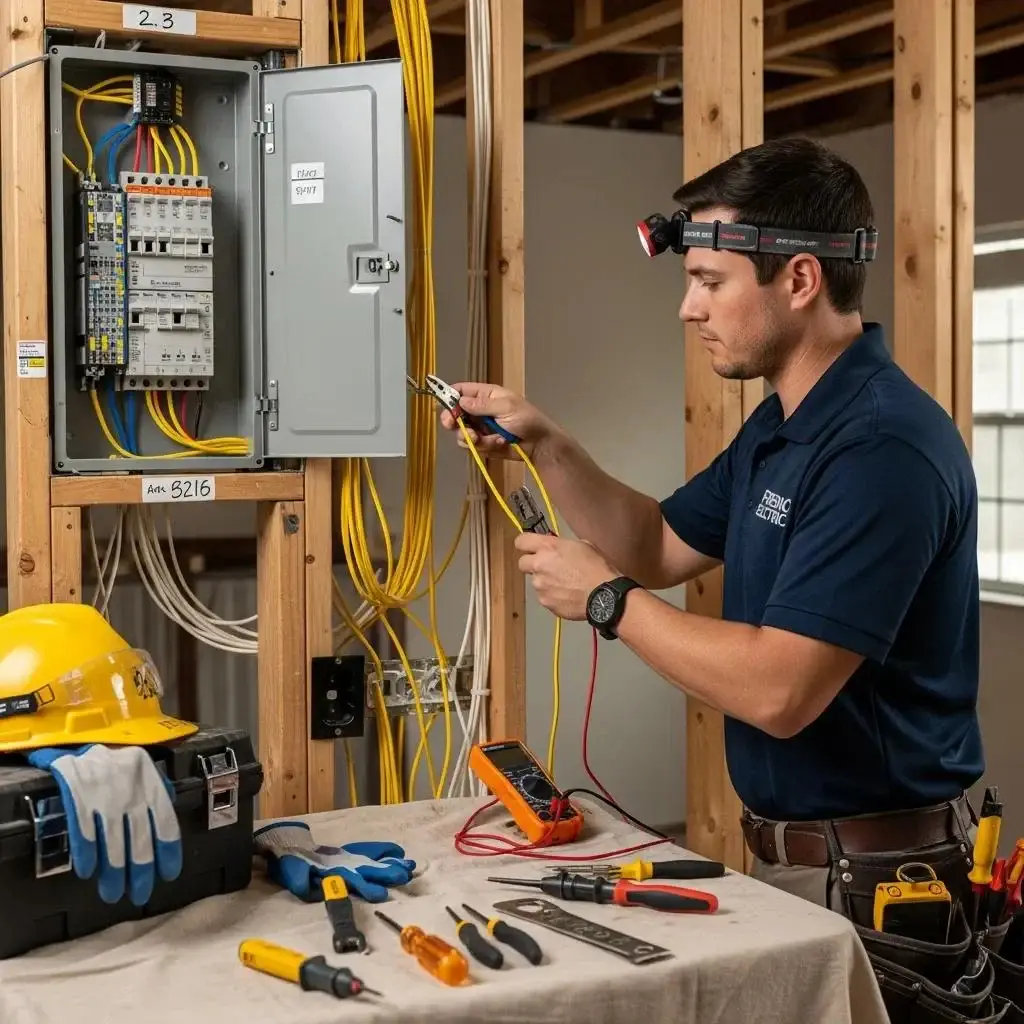
Signs Your Fresno Home Needs Whole-House Rewiring: How to Spot Electrical Warning Signals and Fix Them
Many older Fresno houses still use wiring systems built long before today’s appliances, electronics, and EV chargers existed. A whole-house rewire replaces outdated conductors, adds grounding and modern protection, and brings capacity up to current safety standards. This guide shows how to recognize the electrical warning signs that mean a partial or full rewire may be needed, explains why those signs matter for fire and shock risk, and tells Fresno homeowners what to do next. You’ll learn the most common symptoms, how knob-and-tube and aluminum wiring change the risk picture, which problems need immediate attention, and how home age or renovation plans affect the decision to rewire. We also walk through the benefits, the step-by-step rewiring process, and local cost factors. Keywords like whole-house rewiring Fresno, knob and tube wiring Fresno, aluminum wiring replacement Fresno, and electrical panel upgrade Fresno are included so you can use this information when evaluating your home.
What Are the Most Common Electrical Warning Signs in Fresno Homes?
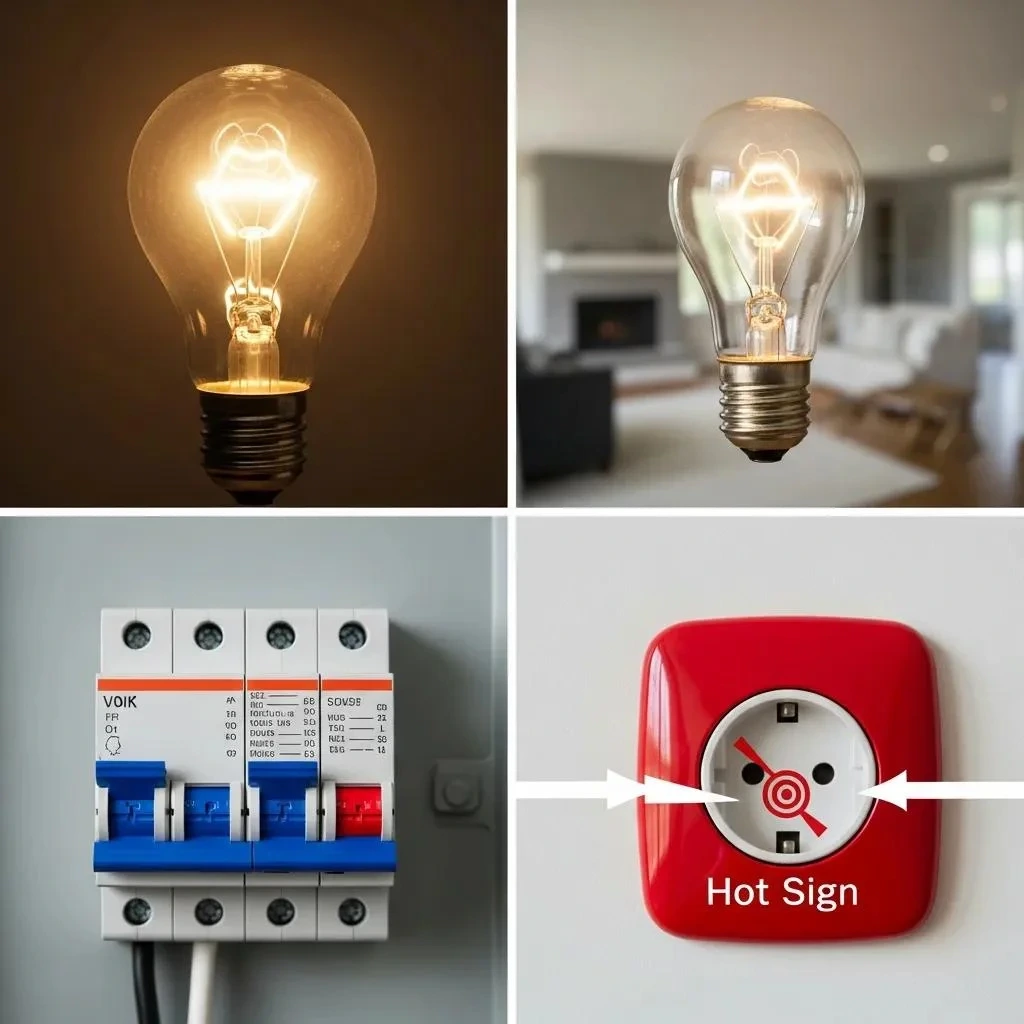
Warning signs usually mean wiring or distribution parts are failing. Left unchecked, they raise the risk of fire and electric shock. These signs show up at outlets, switches, lights, and the service panel and point to loose connections, overheating, arcing, or insufficient capacity. Spotting problems early lets you limit circuit use and schedule an inspection. The list below summarizes the most common symptoms Fresno homeowners report, with a short cause note so you can quickly scan for issues and decide whether to act.
- Flickering or dimming lights: Often from loose neutrals or voltage drop when heavy loads start on the same circuit.
- Frequent circuit breaker trips: Usually a sign of overloaded circuits, short circuits, or failing breakers that need diagnosis.
- Burning smell or scorch marks near outlets: Indicates overheating or arcing and needs immediate attention to prevent fire.
- Hot outlets or switches: Thermal overloads or loose connections can make receptacles dangerously warm.
- Buzzing or crackling sounds at fixtures: Audible arcing or loose hardware that can be an early warning of fire risk.
- Presence of knob-and-tube or aluminum wiring: Older wiring types lack modern protections and may cause safety or insurance issues.
These signs often overlap; any two or more should trigger a professional evaluation. Note when and where each symptom happens — that helps the electrician trace the root cause. If you see multiple warning signals, especially burning smells, hot outlets, or repeated breaker trips, stop using the affected circuits and arrange a diagnostic inspection. For Fresno homeowners who need a rapid assessment, licensed electricians can run safety diagnostics and emergency responses; Electricians in Fresno Today offers diagnostic inspections and emergency response services to identify hazards and recommend next steps.
How Do Flickering or Dimming Lights Indicate Wiring Issues?
Flickering or dimming lights usually mean voltage or connections on a circuit are unstable — often a wiring issue rather than just a bad bulb. If lights flicker when a certain appliance starts, that points to voltage drop from an overloaded circuit or a loose connection that briefly interrupts current. If multiple circuits or the whole house dim, the service panel or neutral connection may be the problem, which is more serious. You can do basic checks — move bulbs between fixtures and see if the flicker follows the bulb or the circuit — but avoid DIY repairs when flicker comes with burning smells or panel problems. Recording when the flicker occurs will speed a professional diagnosis.
Why Do Frequent Circuit Breaker Trips Signal Electrical Problems?
Circuit breakers trip to protect wiring, but frequent trips usually signal an underlying wiring or capacity issue that needs a permanent fix. Overload trips mean the circuit is handling more than it was designed for — common as homes add appliances. Trips from short circuits or ground faults may indicate damaged insulation, loose connections, or moisture intrusion. Track which breaker trips, what was running, and whether trips repeat under the same conditions — that information helps an electrician decide whether to rebalance loads, add dedicated circuits, upgrade service amperage, or replace bad breakers. If a home still has 60–100 amp service and is experiencing frequent trips, consider a professional inspection and a potential electrical panel upgrade to meet modern demand.
How Do Outdated Wiring Types Affect Fresno Home Safety?
Old wiring types fail in different ways and increase fire and shock risk. Knob-and-tube and aluminum wiring were fine for their time but lack modern grounding and connection methods; problems range from brittle insulation to oxidation and thermal cycling at joints. The table below compares key attributes so homeowners can quickly see age ranges, ground status, common issues, and recommended fixes.
The following comparison highlights how wiring choice affects safety and urgency of remediation:
| Wiring Type | Typical Age Range | Grounding | Typical Issues | Recommended Remediation |
|---|---|---|---|---|
| Knob-and-tube | 1880s–1940s | No grounding | Brittle insulation, exposed runs, insulation breakdown | Full replacement with modern copper circuits |
| Aluminum | 1960s–1970s (common era) | Ungrounded or poor terminations | Oxidation at terminations, thermal expansion, loose connections | Pigtailing mitigation or full replacement depending on condition |
| Modern Copper | 1970s–present | Grounded circuits | Sized for modern loads, fewer inherent risks | Maintain and upgrade capacity as needed |
What Are the Dangers of Knob and Tube Wiring in Older Homes?
Knob-and-tube wiring used ceramic insulators and cloth-covered conductors and lacks an equipment grounding conductor, so it’s incompatible with three-prong devices and modern safety devices without major retrofit. Over time the cloth and rubber insulation can become brittle and flake off, exposing conductors to framing or insulation and raising arcing and overheating risk. Many insurers require removal or remediation of knob-and-tube before issuing coverage because of its link to electrical fires. Professional replacement is usually better than spot repairs — modern rewiring restores grounding, balances circuits, and adds device protection. If you find knob-and-tube in a Fresno home, plan a diagnostic inspection and a staged replacement to limit disruption while restoring safety and code compliance.
Why Is Aluminum Wiring a Fire Hazard and When Should It Be Replaced?
Aluminum wiring was a cost-saving measure in the 1960s–70s, but aluminum expands and contracts more than copper and oxidizes at terminations. That can loosen connections and create high-resistance joints that heat up and arc. Safety authorities have documented increased fire risk where aluminum branch-circuit wiring remains untreated. Remediation options include pigtailing aluminum to copper at devices using approved connectors, or replacing circuits with copper conductors. Pigtailing is less invasive and cheaper up front but may be seen as mitigation rather than a permanent fix by some insurers. Full replacement is typically recommended when multiple circuits show problems or where resale and insurance considerations favor a long-term solution. A professional evaluation will identify the safest choice for your Fresno home.
What Are the Urgent Signs of Electrical Hazards in Your Fresno Home?
Urgent signs require immediate action because they indicate active overheating, arcing, or failure that can quickly lead to fire or injury. The checklist below lists red-flag symptoms electricians treat as emergencies and the immediate homeowner actions to take.
- Burning smell or visible scorch marks near outlets or switches: Turn off the affected circuit if safe, evacuate if you see smoke or flames, then call emergency services and an electrician.
- Hot-to-touch outlets or switches: Unplug devices and stop using the outlet; don’t touch the outlet face. If safe, shut off power to that circuit and call a professional.
- Buzzing, crackling, or popping sounds from outlets, switches, or the panel: These may indicate arcing — limit use of the area and contact a licensed electrician immediately.
- Repeated, unexplained sparking or persistent breaker trips with smoke: Treat as an emergency — cut power at the main if safe, evacuate, and call emergency responders, then a licensed electrician.
These steps put people first: cut power, evacuate if there’s smoke, and call emergency services if a fire is suspected. Preserve the scene for the pros where possible. After immediate danger is resolved, schedule a full electrical inspection to find the cause and plan corrective work.
What Does an Electrical Burning Smell in the House Indicate?
An electrical burning smell usually points to overheated wiring, insulation breakdown, or arcing at a connection. It’s different from appliance or food smells — it’s acrid and persistent and may come from outlets, switches, or attic runs. If you smell burning, turn off power to the area if you can do so safely, unplug devices, ventilate if there’s no visible fire, and evacuate and call emergency services if you see smoke. After safety is ensured, contact a licensed electrician for an urgent diagnostic inspection to locate overheated conductors, faulty devices, or overloaded circuits and to document findings for insurance or permits. Repairs often include replacing damaged wiring, upgrading terminations, or targeted rewiring of affected circuits. Prompt professional evaluation lowers the chance of recurrence and prevents hidden faults from escalating.
Why Are Hot Outlets and Buzzing Sounds Warning Signs?
Hot outlets and buzzing are thermal and acoustic clues of increased resistance or arcing at connections, often from loose terminals, worn devices, or overloaded circuits. These signs can precede insulation failure and fire because heat speeds material breakdown and lets arcing become sustained. Stop using the outlet and unplug devices — don’t touch the outlet surface. If the outlet stays hot, switch off the circuit at the breaker (if safe) and schedule a licensed electrician to test the outlet, measure voltage and current, and inspect upstream connections at the panel and junctions. Fixes range from replacing the receptacle and tightening terminals to more extensive rewiring if conductors or distribution parts are damaged. Early action prevents heat damage and protects your home and electronics.
How Does the Age of Your Fresno Home Influence the Need for Rewiring?
Home age lines up with wiring type, service capacity, and the chance of degraded insulation or undersized conductors, so it’s a useful screening factor for inspections and upgrades. As a rule of thumb, electrical systems benefit from evaluation every 25–40 years or whenever you plan major renovations or add heavy electrical loads; inspect sooner if warning signs appear. Era-based guidance helps prioritize work: pre-1950s homes often have knob-and-tube, mid-century homes may have aluminum wiring and limited service amperage, and homes built before 1990 might lack AFCI protection or enough capacity for EV charging. Start with a diagnostic inspection, then decide on selective upgrades or a whole-house rewire based on the findings and your renovation plans.
When Should Homes Built Before 1990 Consider Whole-House Rewiring?
Homes built before 1990 should consider a whole-house rewire if they have two or more risk factors: knob-and-tube or aluminum wiring, frequent electrical failures or trips, 60–100 amp service limits, or plans for major renovations and EV charger installation. Decisions balance objective findings (wiring condition, service amperage, code compliance) and homeowner priorities (renovation timing, resale plans, tolerance for disruption). If extensive knob-and-tube or aluminum is found, or if the service amperage won’t support planned loads, full replacement often makes more sense than repeated partial fixes. Talk to a licensed electrician early in renovation planning so electrical capacity and safety are included in your scope and budget.
How Do Ungrounded Two-Prong Outlets Affect Electrical Safety?
Ungrounded two-prong outlets lack a grounding conductor that diverts fault current and protects sensitive electronics, so they don’t meet modern device or safety-device needs. You can reduce shock risk temporarily by installing GFCI-protected outlets, but those don’t provide a true equipment ground. The code-compliant permanent fix is running new grounded circuits or targeted rewiring to bring receptacles up to standard. A simple three-light outlet tester can reveal a missing ground, but only a licensed electrician can determine whether a true grounding path can be established without replacing the circuit. When reliable grounding can’t be provided because of old branch wiring or inaccessible runs, full rewiring is the proper long-term solution to protect people and devices.
What Are the Benefits and Process of Whole-House Rewiring in Fresno?
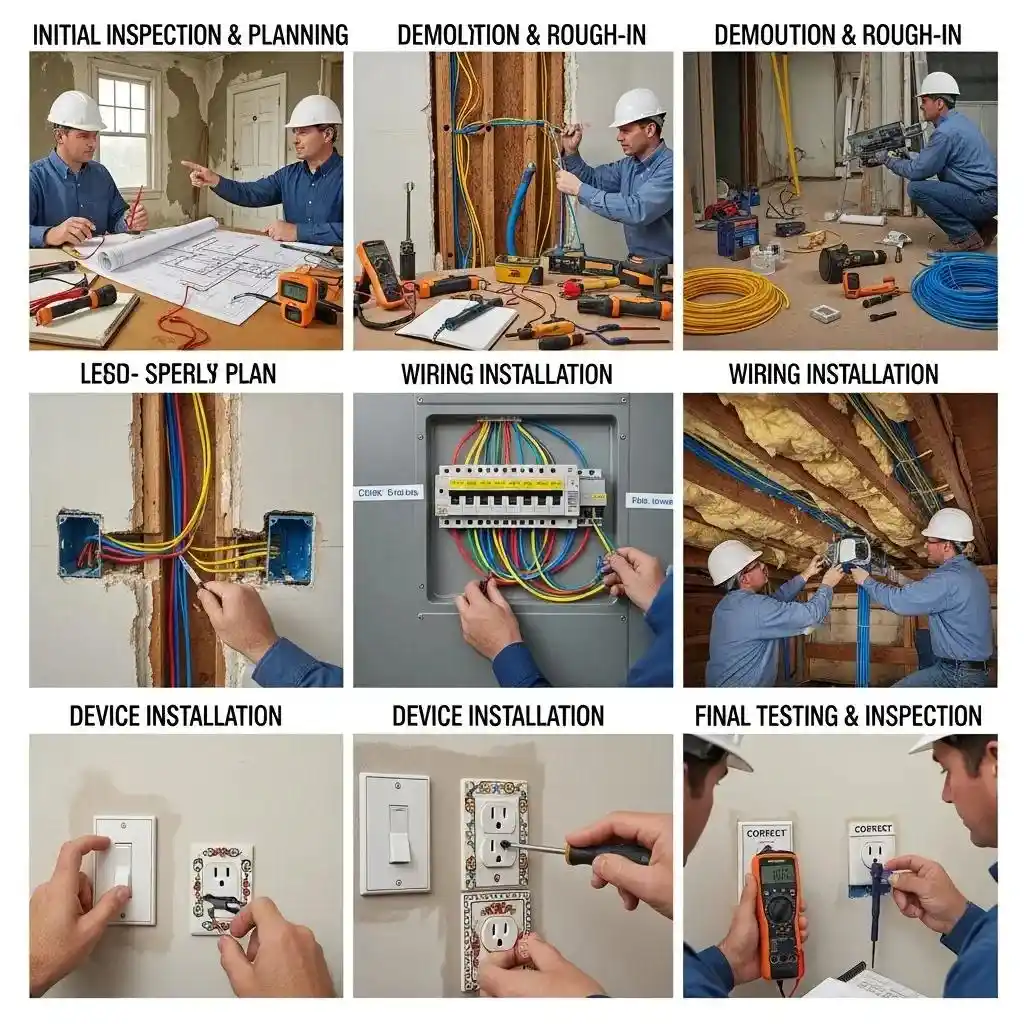
Whole-house rewiring delivers clear safety, capacity, and resale benefits by replacing degraded conductors, adding grounding and modern protective devices, and making a home ready for contemporary loads. Benefits include lower fire risk with improved connections and AFCI/GFCI protection, higher service amperage for appliances and EV charging, and stronger resale value from properly sized wiring and distribution. The project usually follows predictable phases — inspection and permitting, rough-in wiring, panel upgrades, and final testing — so homeowners can plan to reduce disruption. The table below maps the typical rewiring workflow with estimated durations and outcomes so Fresno homeowners know what to expect.
Below is a quick-reference process table outlining each phase and an estimated timeline and outcome:
| Step | Activity | Typical Duration / Outcome |
|---|---|---|
| Inspection & Estimate | Diagnostic testing, circuit mapping, written quote | 1–3 days; defines scope and safety priorities |
| Permitting & Planning | Submit plans to City of Fresno building department | 1–3 weeks depending on permit queue |
| Demolition & Access | Remove finishes as required to access runs | 1–7 days; staging minimizes homeowner disruption |
| Rough-in Wiring | Run new cables, set box locations, install grounding | 3–10 days; modern circuits in place |
| Panel Upgrade & Connect | Replace or upgrade service panel, label circuits | 1–3 days; enables modern amperage and breakers |
| Final Hookups & Testing | Connect devices, test AFCI/GFCI, inspector sign-off | 1–2 days; results in certificate of completion |
This sequence shows how the project moves from assessment to final inspection and gives homeowners realistic expectations for coordinating with contractors and the city inspector. Electricians in Fresno Today performs whole-house rewires, electrical panel upgrades, and final testing to NEC and NFPA standards and offers free estimates and local expertise to help Fresno homeowners plan safe, compliant upgrades.
How Does Rewiring Improve Home Safety and Electrical Capacity?
Rewiring improves safety by adding grounded circuits, replacing degraded insulation, and installing modern protective devices like AFCIs and GFCIs, which greatly reduce arcing fires and electrocution risk. Capacity upgrades often move homes from legacy 60–100 amp service to a modern 200 amp service when needed, and add dedicated circuits for high-draw appliances and EV chargers to prevent overloads and repeated trips. Proper conductor sizing and better circuit distribution reduce voltage drop and heat, protecting wiring and devices while supporting efficient appliance operation. Those technical improvements mean lower fire risk, fewer emergencies, and a home that meets current code expectations on inspection.
What Is the Step-by-Step Process for Whole-House Rewiring in Fresno?
The process starts with a detailed inspection and diagnostic testing to map existing circuits and identify hazards, followed by permitting and plan approval with the City of Fresno. After permits are issued, crews perform selective demolition to access runs, install new cable routes, update junction boxes, and upgrade or replace the service panel if needed. Next come device installation, circuit labeling, and full testing of AFCI/GFCI and grounding systems. Final inspection by the authority having jurisdiction confirms code compliance and allows power restoration with documentation. Clear communication, staging to limit living-area disruption, and firm timelines help homeowners manage the work and coordinate any parallel remodeling.
How Much Does Whole-House Rewiring Cost in Fresno and What Influences Pricing?
Rewiring costs depend on home size, existing wiring type, access difficulty, and whether a panel upgrade or permits are required; local labor and material prices also affect the final number. Common cost drivers include square footage and number of circuits, whether knob-and-tube or aluminum must be replaced, drywall repair and finish work after demolition, a panel upgrade to 200 amp service, and municipal permit and inspection fees. The table below breaks down typical cost drivers and ranges to help Fresno homeowners budget and compare bids.
The following cost-driver table estimates typical influences on rewiring pricing in Fresno:
| Cost Driver | Attribute | Typical Value / Range |
|---|---|---|
| Home Size (SF) | Labor & material scaling | $8–$15 per SF depending on access and finishes |
| Wiring Type | Replacement complexity | Knob-and-tube or aluminum raises costs significantly |
| Access Difficulty | Wall/ceiling demolition, obstructions | Moderate to high impact on labor and finish costs |
| Panel Upgrade | Service amperage and new equipment | Additional fixed cost for new panel and permit |
| Permits & Inspections | City fees and inspector time | Variable; required for code compliance |
What Factors Affect Aluminum Wiring Replacement Costs in Fresno?
Aluminum replacement costs depend on whether you choose mitigation (pigtailing) or full circuit replacement, how many circuits are affected, and how accessible runs are behind walls or ceilings. Drywall repair and repainting add to the total. Pigtailing with approved connectors is less invasive and usually cheaper up front but may be considered a mitigation by some insurers; full replacement with copper is costlier but removes the long-term risks of aluminum conductors. Hidden damage discovered during demolition, required junction box upgrades, or panel incompatibilities can increase labor and materials. When weighing mitigation vs. replacement, prioritize safety and insurance acceptance — a licensed electrician will provide an itemized estimate.
How Does Home Size and Wiring Type Impact Overall Rewiring Expenses?
Home size drives labor and material quantities — more square footage means more cable runs, outlets, fixtures, and breakers — while wiring type multiplies cost when replacement is difficult or hazardous. For example, a 1,200–1,500 SF home with open access typically has a lower per-square-foot cost than a 2,500 SF home with plaster walls and extensive finish repairs. Adding a service panel upgrade or replacing aluminum/knob-and-tube circuits raises total expense. Because of these variables, get a site-specific, line-item estimate that separates labor, materials, finish repair, panel equipment, and permits so you can compare options and financing. For a transparent, itemized estimate in Fresno, contact Electricians in Fresno Today at +1-844-335-0814 to schedule an on-site evaluation and free quote.
Frequently Asked Questions
What are the signs that my home may need rewiring?
Watch for frequent breaker trips, flickering or dimming lights, burning smells near outlets, and hot outlets or switches. Any of these can point to underlying wiring problems that increase fire and shock risk. Finding knob-and-tube or aluminum wiring is another strong indicator that your home may need a full rewire to meet modern safety standards.
How can I find a qualified electrician for rewiring in Fresno?
Start with local directories and reviews, and look for licensed electricians who specialize in residential rewiring and older homes. Ask for recommendations from friends or neighbors, confirm insurance and bonding, and get multiple quotes to compare scope and price. Verify credentials and check for complaints with the Better Business Bureau before hiring.
What should I expect during the rewiring process?
Expect an initial inspection to assess existing wiring, then permits and planning, followed by the actual work. That work usually includes removing old wiring, installing new circuits, and upgrading the service panel if needed. Projects can run from days to weeks depending on home size and complexity. Stay in close communication with your electrician to understand timelines and reduce disruption.
Are there any financial assistance programs for home rewiring?
Yes—some local programs, non-profits, and utility companies offer grants or low-interest loans for electrical upgrades, especially for low-income homeowners. Check with Fresno housing authorities, community development organizations, or your utility provider to learn about eligibility and available programs.
How can I prepare my home for rewiring?
Clear areas around outlets, switches, and the service panel to give electricians easy access. Move furniture and personal items away from workspaces. Plan for temporary power outages and discuss any special needs with your electrician. Having a place to stay or knowing which rooms will be off-limits helps minimize disruption.
What are the long-term benefits of whole-house rewiring?
Whole-house rewiring improves safety with modern wiring and protective devices, increases capacity for today’s appliances and EV charging, and can boost resale value. It reduces the risk of electrical fires and emergency repairs and brings your home into compliance with current codes — giving you long-term reliability and peace of mind.
DISCLAIMER This site is designed to assist homeowners in connecting with electrician service contractors. All electrical contractors are independent and this site does not warrant or guarantee any work performed. It is the responsibility of the homeowner to verify that the hired electrical service contractor furnishes the necessary license and insurance required for the work being performed. All persons depicted in a photo may be actors or models and not contractors listed on this site.